

It is 7:40 in the morning. Your preschooler is still in pyjamas, one shoe is missing, the nursery bag is half packed, and the lunchbox is still in the dishwasher from last night. You are trying to do three jobs at once — dress a child, find a water bottle, and remember what day it is — while the clock moves faster than your hands. Nobody is doing anything wrong. The morning is simply asking for too many decisions at once.
Now picture the same morning with one change: everything was decided last night. The clothes are laid out on the chair. The bag is packed and by the door. The lunch is made and in the fridge. The shoes are in a pair, by the front door, next to the coats. All that is left is breakfast, teeth, and shoes on feet. This night before checklist for preschool mornings parents gives you that version of the morning, in one simple list you can work through in twenty minutes, after your child is in bed.
Why the Evening Before Beats the Morning
A preschool morning fails for a simple reason: too many small choices, all at once, with a tired child and a fixed deadline. Choosing clothes, packing a bag, making lunch, finding shoes, and checking the weather are each easy on their own. Together, before 8:00, they are a lot. Moving them to the evening spreads the same jobs across a calmer hour, when nobody is in a rush and nobody is hungry.
The second reason is your child. A three-year-old who has to choose clothes, eat breakfast, and get dressed in twelve minutes will stall, because every choice is a negotiation. A three-year-old who chose their clothes last night, when there was time to change their mind twice, walks to the chair in the morning and puts them on. The work is the same. The timing is what changes the mood. The American Academy of Pediatrics makes the same point in its guide to growing independence in young children: if the clothes are ready the night before, the morning is only about getting dressed.
Keep the list short on purpose. Ten jobs, twenty minutes, done by 8:00 in the evening. If a job takes longer than three minutes, it does not belong on this list — it belongs on the weekend. The point is not a perfect evening. The point is a morning with nothing left to decide.
The Checklist: Ten Jobs, Twenty Minutes
Here is the night before checklist for preschool mornings parents in one table. Work through it top to bottom, after your child is asleep, or with your child before bed if they like helping. Tick each job off as you finish it, and leave the list where you can see it in the morning.
| Job | What to do | Where it goes | Time |
|---|---|---|---|
| 1. Clothes | Lay out the whole outfit, including socks and underwear | On the chair, in order | 2 min |
| 2. Shoes | Pair them, check they fit, put them by the door | By the front door | 1 min |
| 3. Bag | Pack the nursery bag: spare clothes, water bottle, book bag | By the front door | 3 min |
| 4. Lunch | Make the lunchbox and put it in the fridge | Fridge, top shelf | 4 min |
| 5. Breakfast | Set the table: bowls, spoons, cereal out | Kitchen table | 1 min |
| 6. Papers | Sign forms, check the nursery note, put letters in the bag | In the bag | 2 min |
| 7. Coat | Check the weather, hang the right coat by the door | By the front door | 1 min |
| 8. Keys | Keys, phone, wallet and your own bag in one spot | By the front door | 1 min |
| 9. Alarm | Set the alarm, lay out your own clothes | Bedroom | 2 min |
| 10. Rest | Check the plan once, then stop for the night | — | 3 min |
Twenty minutes is the whole list. If you only have ten, do jobs one to four: clothes, shoes, bag, and lunch. Those four are the ones that cause the morning rush. The rest are small helps, not the core of the plan.
1. Clothes Out, in Order
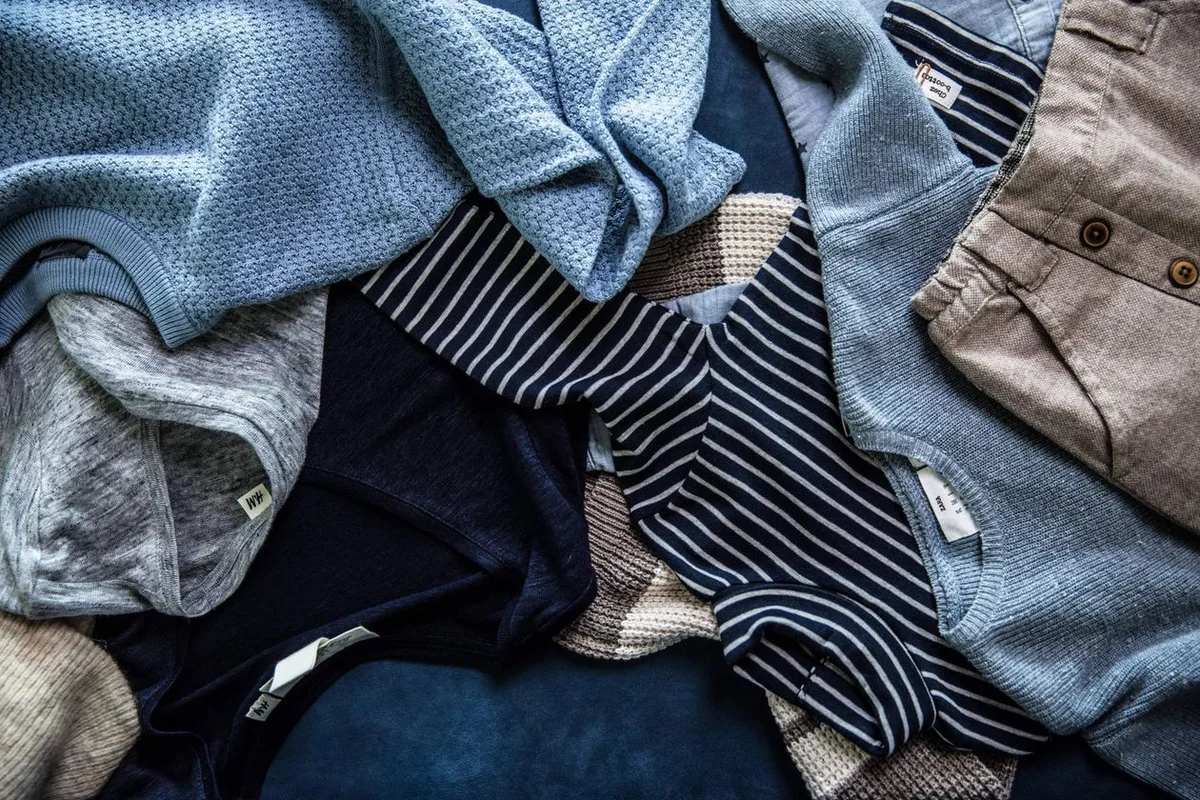
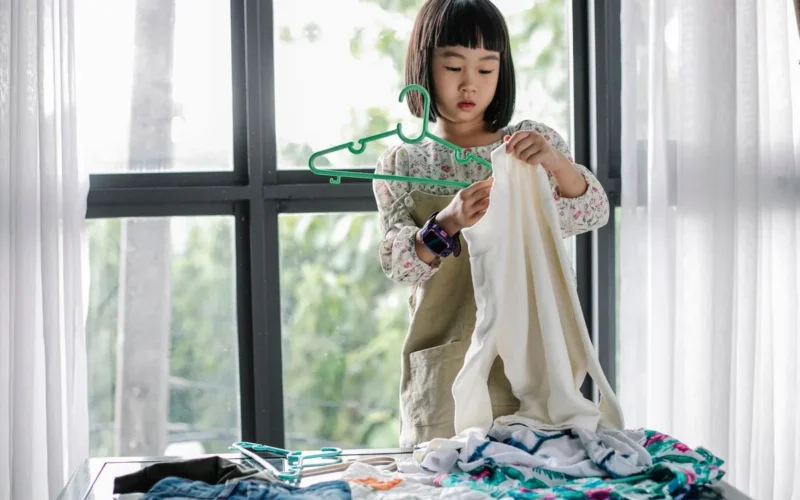
Lay the whole outfit out on a chair, in the order it goes on: underwear first, then top, then bottoms, then socks on top. A child who can see the order can dress themselves far sooner than a child who is handed a pile. If your child likes choosing, let them choose between two outfits the night before, and only two. Ten outfits in the morning is a decision. Two outfits in the evening is a game.
Check the weather while you choose. A cold morning needs a vest under the top and a warm coat by the door. A wet morning needs wellies by the door and a spare pair of socks in the bag. One look at the forecast tonight saves a full change of clothes in the morning, when there is no time for one.
Keep a spare set of clothes in the nursery bag at all times, and check it on Sunday night, not on a weekday morning. Spills, puddles, and paint happen most days at nursery, and a spare set that is already packed is one less thing to think about. To lay out clothes night before toddler routine works best when the choosing happens the night before and the dressing happens in the same order every morning, so the child learns the order by doing it, not by being told.
2. Shoes and Coat by the Door
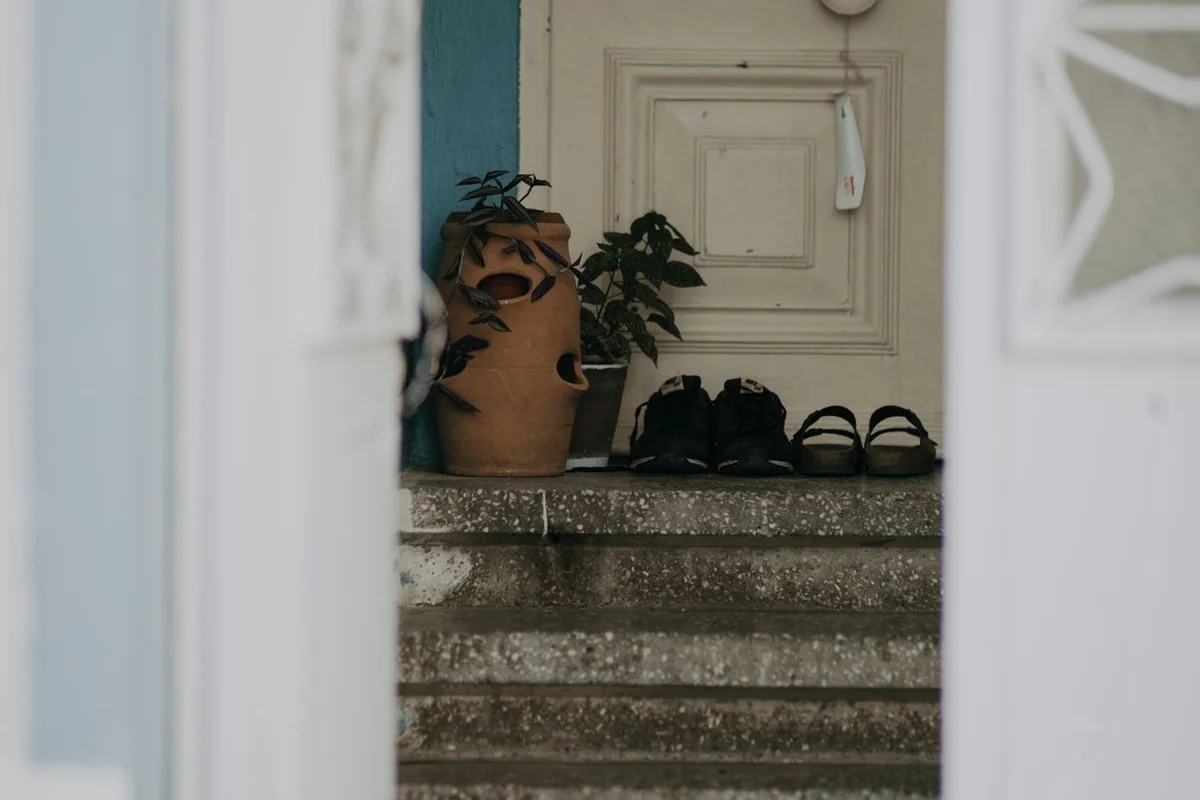
Shoes cause more morning delays than almost anything else, because one shoe always wanders off. The fix is a place, not a search: one pair of shoes, together, by the front door, every night. Put a small tray or a basket there, and make it the only place shoes live. When the shoes have a home, the morning stops being a hunt.
Check the shoes fit while you put them there. Preschool feet grow fast, and a shoe that pinched last week will still pinch tomorrow. A quick check tonight — toes to the end, no rubbing at the heel — is far easier than a crying child and a shoe change at the door.
Hang the coat next to the shoes, with the right one for tomorrow’s weather. A raincoat on a dry day is a small problem. A thin jacket on a cold, wet morning is a real one. If it might rain, put the umbrella by the door too, and put the wellies next to the shoes. The door is your launch pad: everything your child needs to leave the house should be standing there, ready, before anyone is awake.
3. The Bag, Packed Tonight
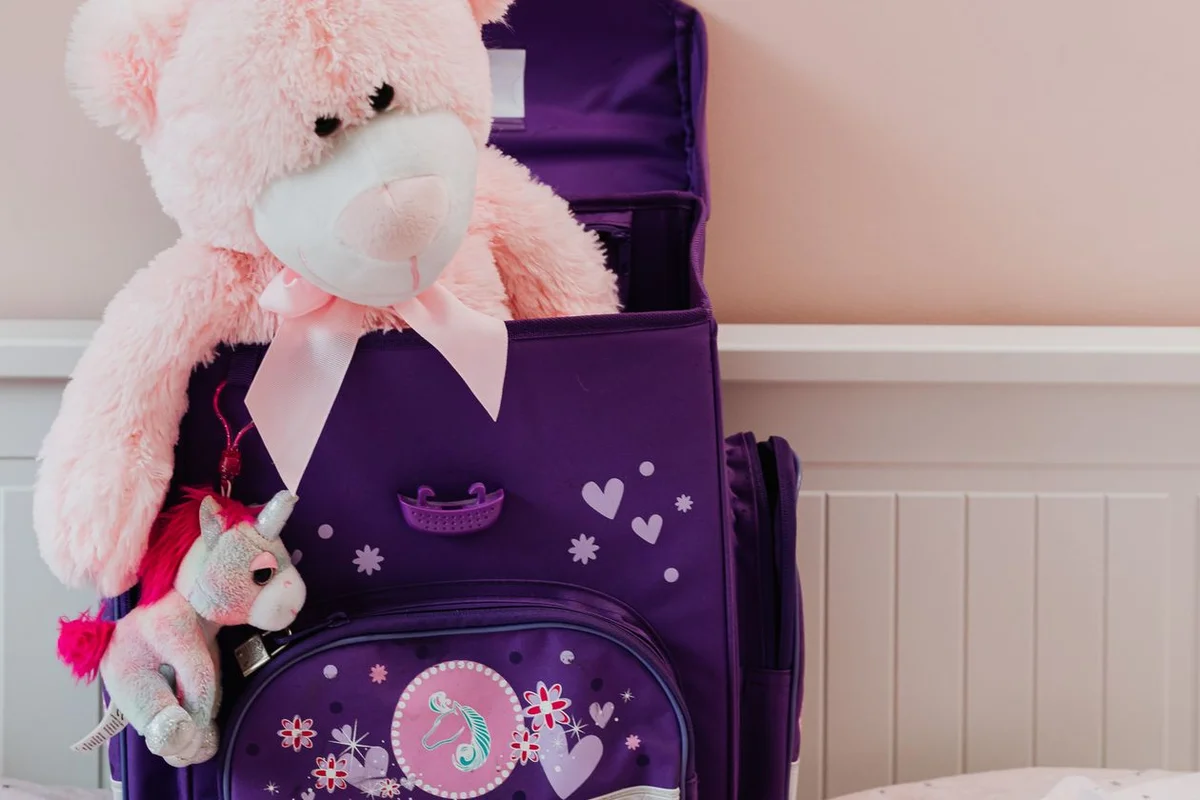
Pack the nursery bag the night before, in the same order every time: spare clothes at the bottom, then the water bottle, then the book bag and any letters on top. A bag packed in the same order is a bag you can check in ten seconds in the morning — open it, look at the top, and you know it is done.
Preparing bags lunches night before school run is the one job parents skip most often, and it is the one that saves the most time. The lunchbox goes in the fridge, not in the bag, so nothing gets warm overnight. Put the empty bag by the door, packed and zipped, so the morning job is just to lift the lunchbox out of the fridge and drop it in.
Check the water bottle as you pack it: washed, filled, and closed properly. A bottle that leaks in the bag soaks the spare clothes, the book bag, and the whole morning. Fill it tonight, stand it upright in the bag, and check the lid clicks. One small check saves a wet bag and a changed outfit before you have even left the house.
4. Lunch and Breakfast, Ready to Go
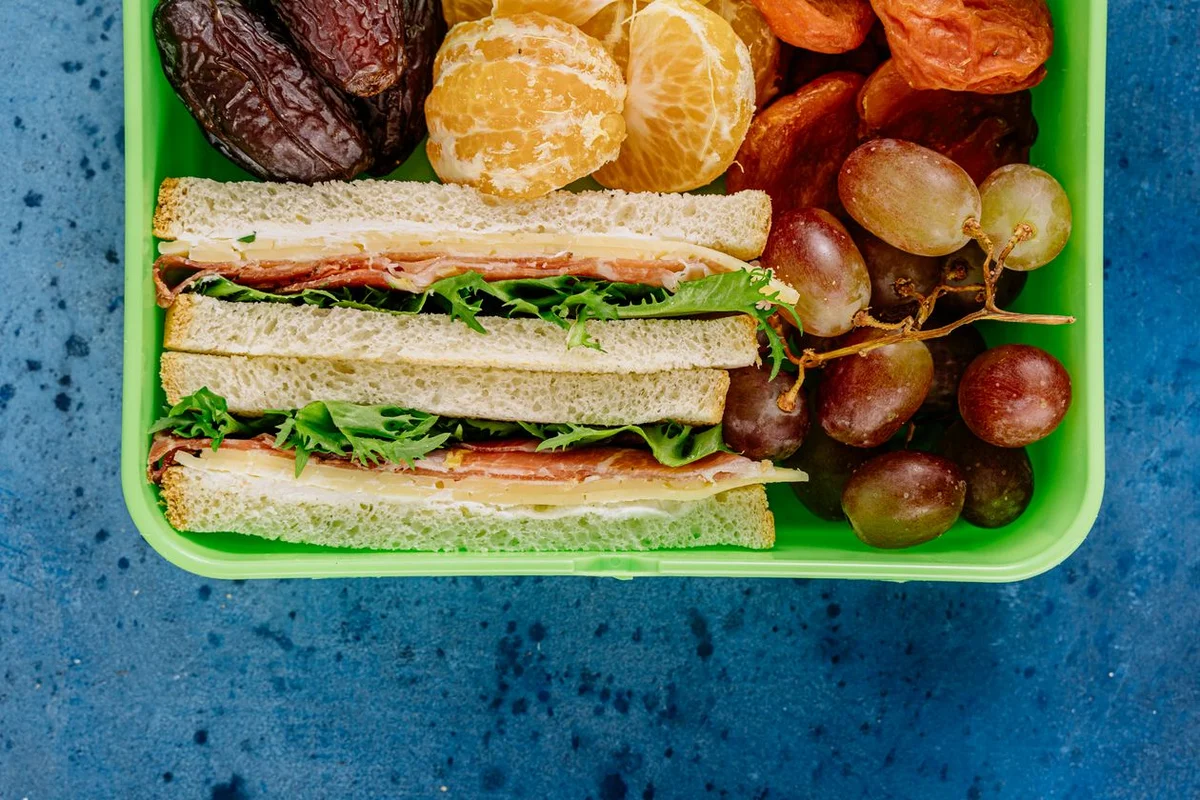
Make the lunchbox the night before, and keep it simple: a sandwich or a wrap, one piece of fruit, one snack, and a drink. Fancy lunches are for weekends. Weekday lunches need to be made in four minutes, eaten in ten, and finished without a fuss. Put the finished box in the fridge, on the top shelf, where you can see it first thing.
Set the breakfast table while you are in the kitchen: bowls, spoons, and the cereal box out on the table. A table that is set the night before turns breakfast into sitting down and eating, instead of opening cupboards while a hungry child waits. If your child eats porridge, put the oats and the pan out too, so the morning starts with cooking, not with finding things.
If your nursery provides lunch, skip the lunchbox and use the time for something else — but still check the bag. A lunch provided by nursery still needs a water bottle, a spare set of clothes, and any forms that came home. The bag is the job, whether lunch is in it or not.
5. Papers, Forms, and the Nursery Note
Read the nursery note the night before, not in the morning. Notes about trip money, a photo day, a change of pick-up time, or a party on Friday are the things that cause the worst morning rushes, because they need an answer and there is no time to give one. Read the note tonight, sign what needs signing, and put the money or the form in the bag.
Keep a small tray or a hook by the door for anything that has to go to nursery: forms, letters, a birthday card, a show-and-tell toy. If it is not in the tray, it will not be in the bag. If it is in the tray, it goes in the bag when you pack it, and the morning takes care of itself.
Check the calendar once, for tomorrow only. Is it a library day? A swimming day? A day when they need wellies or a sun hat? One look tonight, and the right things go in the bag. Five looks in the morning, while a child waits by the door, is how things get forgotten.
6. Your Own Things, in One Spot
The checklist is for your child, but your morning needs the same trick. Put your keys, your phone, your wallet, and your work bag in one spot by the door, every night. Parents lose more time looking for their own things than for their child’s, and a child who is ready and waiting by the door will not wait happily for long.
Lay out your own clothes too, if you can. It takes two minutes, and it is the same idea: fewer decisions in the morning, more calm for everyone. A parent who is dressed and ready before the child wakes up is a parent who can spend the morning helping, instead of rushing.
Set the alarm for the time you actually need, not the time you hope for. If the morning takes forty-five minutes, set the alarm forty-five minutes before you have to leave, plus ten minutes for the things that always go wrong. An alarm that gives you ten minutes spare is a gift. An alarm that gives you none is a rush.
7. The Wind-Down That Makes It Work
The checklist only works if the evening before it is calm, and the calm starts with bedtime. A child who is overtired at 7:00 will not choose clothes happily, and a parent who is overtired will not pack a bag carefully. Do the choosing and the packing after the bedtime routine, when the house is quiet, not before it, when everyone is still winding down.
Let your child help with the easy parts before bed: choosing between two outfits, putting their shoes by the door, or dropping the water bottle into the bag. A child who helped pack the bag will look for it in the morning. A child who watched you do it will wait for you to do everything else too. Our toddler bedtime routine chart shows how the evening steps fit together, so the night-before jobs sit after the story, not instead of it.
Keep the evening routine the same, and the checklist becomes part of it, not an extra job. Bath, story, bed, then ten minutes of packing while the house is quiet. The same order, every night, is what makes it a habit instead of a chore. Our family evening routine shows how the hours before bed shape the whole night, and the checklist is the last step of that evening, not a separate task.
By Age: 2, 3, and 4
The same ten jobs work for every preschool age. What changes is how much your child does, and how much you do for them.
Age 2
At two, you do nearly everything, and the checklist is mostly for you. Lay the clothes out, pack the bag, and put the shoes by the door while your child sleeps. In the morning, dress them in the order the clothes are laid out, and say each step out loud: “Top on. Trousers on. Socks on. Shoes on.” They will not help yet, but they will learn the order, and the order is the whole lesson.
Age 3
At three, your child can do parts of the list with you. They can choose between two outfits, carry their shoes to the door, and put the water bottle in the bag. Let them. The more they do, the more the morning belongs to them. This is also the age when choosing takes longest, so keep the choice to two outfits, and make it in the evening, when there is time to change their mind.
Age 4
At four, your child can follow the whole list with you nearby. Let them lay out their own clothes, in order, and tick each job off the list. They can pack their own bag, with you checking it after. Give them one real job each night, and let them own it. Four-year-olds also start to ask about tomorrow — what they will do, who they will see — so answer briefly, in the evening, before bed. A child who knows what tomorrow holds sleeps better, and wakes up ready for it.
Make Your Own Checklist in Ten Minutes
Print the night before checklist for preschool mornings parents and stick it on the fridge, or copy it onto a piece of card and put it by the front door. The list works because it is always in the same place, in the same order, and because you tick it off every night. Do not add new jobs to it for at least two weeks. A list that grows is a list that gets ignored.
To make your own, take a piece of card and write the ten jobs in a row, with a small box next to each one. Let your child draw a picture for each job: a shirt for clothes, a shoe for shoes, a bag for the bag, an apple for lunch. Pictures work better than words for a preschooler, because the list is about their morning, not yours. Add a peg or a magnet they can move along the row as each job is done.
Put the list where you pack the bag, not where you eat breakfast. If it is by the door, it gets used. If it is in a drawer, it gets forgotten. Weekends can follow the same ten jobs at a slower pace, with no nursery run in the morning. Our weekend family rhythm shows how the same routine bends without breaking when there is no deadline, and the checklist still helps, because the jobs are the same even when the time is not.
When Mornings Still Go Wrong
Some mornings the checklist will not save you, and that is normal. A bad night’s sleep, a child who wakes up upset, or a morning when the car will not start will break the plan. When that happens, do the morning in the same order, faster, and skip the jobs that do not matter. Clothes, shoes, bag, and lunch are the core. Breakfast can be eaten in the car, if it has to be. The order is what tells your child that the morning is still under control.
If your child refuses the clothes you laid out, do not start again. Offer the same two outfits, and let them choose one. If they refuse both, put the first outfit on and move on. A morning is not the time to teach a lesson about choosing. The lesson was last night, when there was time. In the morning, the job is to leave the house.
If the bag is forgotten, do not go back for it unless you have time. A nursery will have spare clothes, and a lunch can be bought or borrowed for one day. Going back for a forgotten bag turns a five-minute delay into a twenty-minute one, and a twenty-minute delay turns a calm morning into a late one. Pack it tonight, and the problem does not happen tomorrow.
If mornings go wrong most days for weeks, and your child is upset every morning, look at the evening, not the morning. Is bedtime late? Is the checklist being done after everyone is already tired? Move the jobs earlier, to just after dinner, and keep the last hour before bed free of packing. A checklist done at 6:30 works. A checklist done at 9:00, when everyone is tired, does not.
Questions Parents Ask
What time should I do the checklist? After your child is in bed, or just before, if they like helping. Twenty minutes, done by 8:00, is the aim. If you do it after 9:00, you will rush it, and a rushed checklist is a list with jobs missed. Do it early, and the evening is yours after it.
What if my child changes their mind in the morning? Let them change it once, quickly, between two outfits you chose last night. If they want a third outfit, the answer is the same every morning: “These are today’s two. You chose them last night.” A rule that changes is not a rule, and a child who knows the rule stops testing it.
Should I pack the bag or let my child pack it? Both. Let your child pack it, and check it after. A child who packs their own bag learns what goes in it, and a parent who checks it makes sure nothing is missing. The check takes ten seconds. The lesson lasts far longer.
What if nursery provides lunch? Skip the lunchbox, and use the time for the bag check instead. A lunch provided by nursery still needs a water bottle, spare clothes, and any forms. The bag is the job, whether lunch is in it or not.
Can I do the checklist on Sunday for the whole week? You can lay out five outfits on Sunday, and pack five spare sets, but the bag and the lunch still need doing every night. A week of outfits in the wardrobe is a great help. A bag packed on Sunday is a bag that will be wrong by Tuesday. Do the clothes weekly, and the bag daily.
What if two children go to nursery? Run the same list for both, at the same time, and let the older child help the younger one. Lay out both outfits side by side, pack both bags together, and put both pairs of shoes by the door. The list stays the same, and the children learn to wait for their turn. The morning takes a little longer, but the list is what keeps it from falling apart.
A Calmer Morning, Decided Tonight
Mornings will never be perfect, and they do not need to be. What your preschooler needs is a morning that is mostly the same, mostly calm, and mostly decided before they wake up. A night-before checklist gives them that. It shows them what they will wear, what is in their bag, and what will happen next, before the morning has even started.
Keep the night before checklist for preschool mornings parents where you pack the bag, keep the jobs small, and keep the order the same. The mornings will not fix themselves overnight, but in two weeks, you will notice the difference: fewer searches, fewer arguments, and a child who walks to the chair, puts on the clothes that are waiting there, and heads for the door. That is the morning working, decided the night before. Its morning pair, our toddler morning routine chart, works the same way at the other end of the night, once the clothes are on and the bag is by the door. Our visual weekly schedule shows how to put the whole week on the wall, so your child can see what comes next.
This article is general information for parents, not medical advice. Every child is different. If you are worried about your child’s sleep, eating, or health, please talk to your doctor or health visitor.
Leave a Reply