
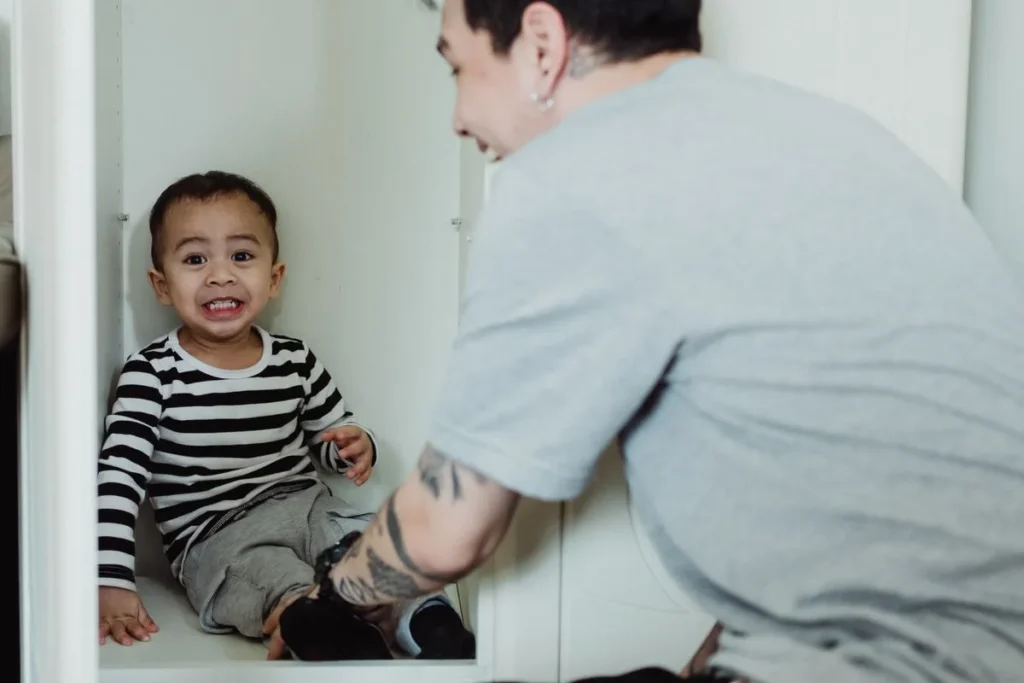
It is 7:40 in the morning. Nursery starts in twenty minutes, the bag is packed, your shoes are on, and your toddler is under the table in their pyjamas, giggling, while the shirt you need them to wear lies on the floor where they threw it. You ask nicely. You ask firmly. You hold up the shirt like a flag. They run away. Every parent of a two, three or four year old has lived this exact morning, and it feels far bigger than a shirt. It feels like the whole day is about to go wrong before it has even started.
It is not about the shirt. Getting dressed is one of the first things in a small child’s day that they can actually control, and on a busy morning it is often the only thing. That is why the battle is so fierce, and why winning it by force never really works — the next morning, the same battle starts again. This guide to toddler won’t get dressed in the morning what to do will show you why the struggle happens, which choices actually end it, and what to say when your child still says no.
Why Getting Dressed Turns Into a Battle
First, it helps to know what your child is fighting. It is rarely the clothes. A toddler’s day is almost entirely decided by other people: when they wake, what they eat, where they go, when they sleep. Getting dressed is one of the few moments where “no” is a word they can actually use — and use it they do. When you hear “no” at the wardrobe, you are hearing a child who has found a lever, and they are pulling it to see what happens.
Second, getting dressed is a transition. Your child is being asked to stop something lovely — playing, breakfast, sitting with you — and do something boring, then leave the house. Transitions are hard at this age even when the thing coming next is fun. A child who refuses their coat is often not refusing the coat at all. They are refusing the leaving.
Third, clothes themselves can be genuinely unpleasant. A label that scratches, a seam across the toes, a jumper that feels tight round the neck, socks that twist — adults take these things off and forget them, but a toddler cannot explain them. They just know that getting dressed feels wrong, and the only protest they have is to run away or go limp. If your child hates one particular item every single time, believe them: it is probably the item, not the morning.
And fourth, mornings are rushed, and children can feel it. A parent checking the clock, calling from the hallway, holding the coat open like a net — all of that tells a child that something stressful is happening, and stress makes them dig in. The calmer the morning, the shorter the battle. That sounds backwards when you are already late, but it is true almost every time.
The Choice Trick: Two Real Choices
The single most useful change you can make costs nothing and takes ten seconds. Stop asking “Shall we get dressed now?” That is a yes-or-no question, and your toddler has already learned that “no” is the most powerful word they own. Instead, offer two choices you are happy with, and let them pick. “Red shirt or blue shirt?” “Trousers first or top first?” “Shall I help with one arm, or will you do both arms yourself?” The getting dressed still happens — the choice is only about the how.
That is the heart of toddler won’t get dressed in the morning what to do: give a real choice about the how, never about the whether. A choice that is not really a choice — “Do you want to get dressed, or do you want me to be cross?” — is a threat in a costume, and children see through it at once. But two honest options, both of which end with clothes on, hand your child the control they were fighting for, without handing them the morning.
Keep the choices small and concrete. Two is enough. Three or four options at 7:40 in the morning is not freedom, it is a meeting, and your toddler will stall while they consider the menu. Hold the two shirts up where they can see them. Let them touch them. Then accept the answer at once, even if it is the shirt you like less, even if it does not match the trousers. A child whose choice is honoured will choose again tomorrow. A child whose choice is overruled learns that choosing is a trick, and stops playing.
| The moment | Offer this choice | Avoid this |
|---|---|---|
| Picking clothes | “Red shirt or blue shirt?” | “What do you want to wear?” (too open, stalls) |
| The order | “Trousers first or top first?” | “Shall we get dressed now?” (a yes-or-no question) |
| Shoes | “Velcro shoes or wellies?” | “Put your shoes on.” (no choice at all) |
| The coat | “Coat on here, or in the car?” | “If you don’t wear your coat, you’ll be cold.” (a lecture) |
| When they stall | “I help with one arm, or you do both?” | “Do it now or there will be no park.” (a threat) |
One more thing about choices: offer them before the battle, not during it. A child who is already under the table, already laughing, already winning, cannot hear a choice. Choices work in the calm minute before the clothes come out. That is why the night before matters so much — and it is the next thing to fix.
Lay It Out the Night Before
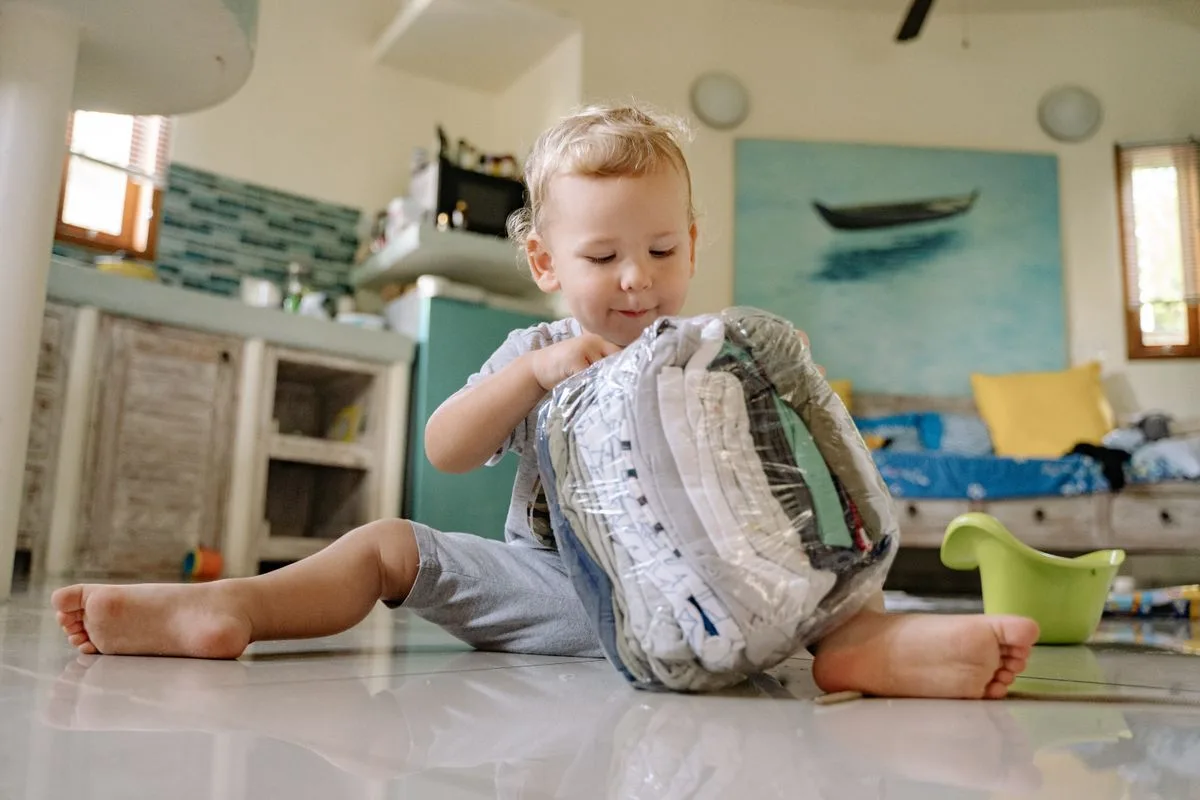
The easiest morning battle is the one that never happens. If the clothes are already chosen, laid out, and agreed the night before, the morning has one job fewer, and your child has already had their say. Let them pick tomorrow’s outfit while they are calm, in their pyjamas, with no clock running. Two shirts, two bottoms, they point, you lay them out together. Our night-before prep checklist covers the whole evening routine — clothes, bag, shoes and lunch — so the morning starts with getting dressed, not with deciding.
Make the layout visible and part of the game. Clothes on a low chair, or a small pile on the end of the bed, with the shoes underneath and the coat on its hook. A child who can see tomorrow’s clothes as they fall asleep is a child who has already agreed to them. In the morning, there is nothing to argue about: these are the clothes we picked, and here they are.
If your child changes their mind in the morning — and sometimes they will — keep one swap in your pocket. “You picked the blue one last night. You can have the blue one, or the red one instead. Which one?” That is still a choice, and it still ends with clothes on. But do not reopen the whole wardrobe. A child who learns that the morning brings a fresh negotiation will negotiate every morning.
A Dressing Order That Works
Children get dressed far more easily when the order never changes. Same order, every morning, so the child does not have to think about what comes next — they just do the next picture in the row. Pants, trousers, socks, top, shoes, coat. Say it the same way every day, in the same order, and after a week your child will start doing the next step before you say it. A picture strip on the wall helps even more: six small pictures in a row, and your child follows them from left to right. Our toddler morning routine chart gives you the same strip as a printable, with picture steps your child can follow on their own.
Let them sit down. Dressing is a balance test as much as anything, and a child hopping on one leg while you hold a sock is a child who will fall over, get cross, and blame the sock. Sit on the floor, or on the bottom stair, or on the bed. Feet supported, trousers easy, shoes within reach. It is a small thing, and it removes half the struggle.
Teach undressing first. It is easier than dressing, and success matters: a child who can take their own clothes off feels like someone who can get dressed. Let them pull off their socks at bedtime, push down their own trousers, wriggle out of their top. Every small win is practice for the morning, and practice done at bedtime costs nothing, because nobody is in a rush.
By Age: What They Can Do at 2, 3, 4 and 5
Expectations are half the battle. A two year old who cannot put their own shoes on is not being difficult — they simply cannot do it yet. Matching the job to the age stops you asking for something impossible, and stops your child failing at it every morning. The NHS guide to getting dressed sets out the usual order in which dressing skills appear, and it is a useful check against what your child can reasonably manage.
At two, most children can help: they hold out an arm for a sleeve, push a foot towards a shoe, pull off shoes and socks, and take off a hat. They can put on a hat and shoes of their own, and pull down loose trousers. What they cannot do is the fiddly work — buttons, zips, tight sleeves — so do that part yourself, without comment, and let them do the part they can.
At three, they can pull large zips up and down, pull trousers up and down for the toilet, and put on shoes without fastenings — often on the wrong feet, and often back to front. That is normal. A three year old in a back-to-front top has still got dressed, and correcting it with a laugh, or not correcting it at all before nursery, keeps the morning moving.
At four, most children can manage socks and shoes on their own, and get a T-shirt on and off — again, sometimes back to front. This is the age for the two-choice trick to really work, because a four year old can hold two options in their head and feel proud of picking one. It is also the age to let them do the whole job, slowly, even when you could do it in half the time.
At five, most children dress and undress mostly on their own, and can manage buttons, though small buttons and laces may still need help. A five year old who still wants you nearby is not behind — they are just using you as a safe base while they practise. Sit with them, hand them the next item, and let them do the doing.
When They Still Say No: A Calm Script
Sometimes you do everything right — the choices were offered, the clothes were laid out, the order is the same — and your child still says no. That is when you need a script, the same words every time, so you do not have to think while you are also trying to get out of the door. Here is one that works for most families, and you can use it word for word.
First, name the feeling, briefly: “You don’t want to get dressed. You wanted to keep playing.” That is all. Do not explain, do not bargain, do not list the reasons. A child who feels heard stops shouting sooner than a child who feels argued with. Then restate the choice, once: “Blue shirt or red shirt?” If they answer, the battle is over — accept it and move on.
If they do not answer, start the job yourself, calmly, and let them finish it. This is called backward chaining: you do the first steps, and your child does the last step, so they always end in success. Put the top over their head, then let them push their own arms through. Hold the trousers open, then let them pull them up. The child who finishes the job feels like the child who did the job, and tomorrow they will want the earlier steps too.
Once you know toddler won’t get dressed in the morning what to do, the mornings do not become perfect — they become shorter. There will still be days when nothing works, and on those days, dress your child with a running commentary and no lecture: “Arms up, here is your top, one arm, two arms, done.” Then leave it. A battle you refuse to have is a battle that ends, and tomorrow is a fresh morning.
One thing never to do: do not hold your child down to force clothes on while they scream. It works once, and it teaches them that getting dressed is something done to them, not something they do. It also teaches them that mornings are frightening, which makes the next morning worse. If you are at that point, stop, take a breath, and take the pressure off — sit down, offer a cuddle, and start again in two minutes.
Clothes That Make Mornings Easier
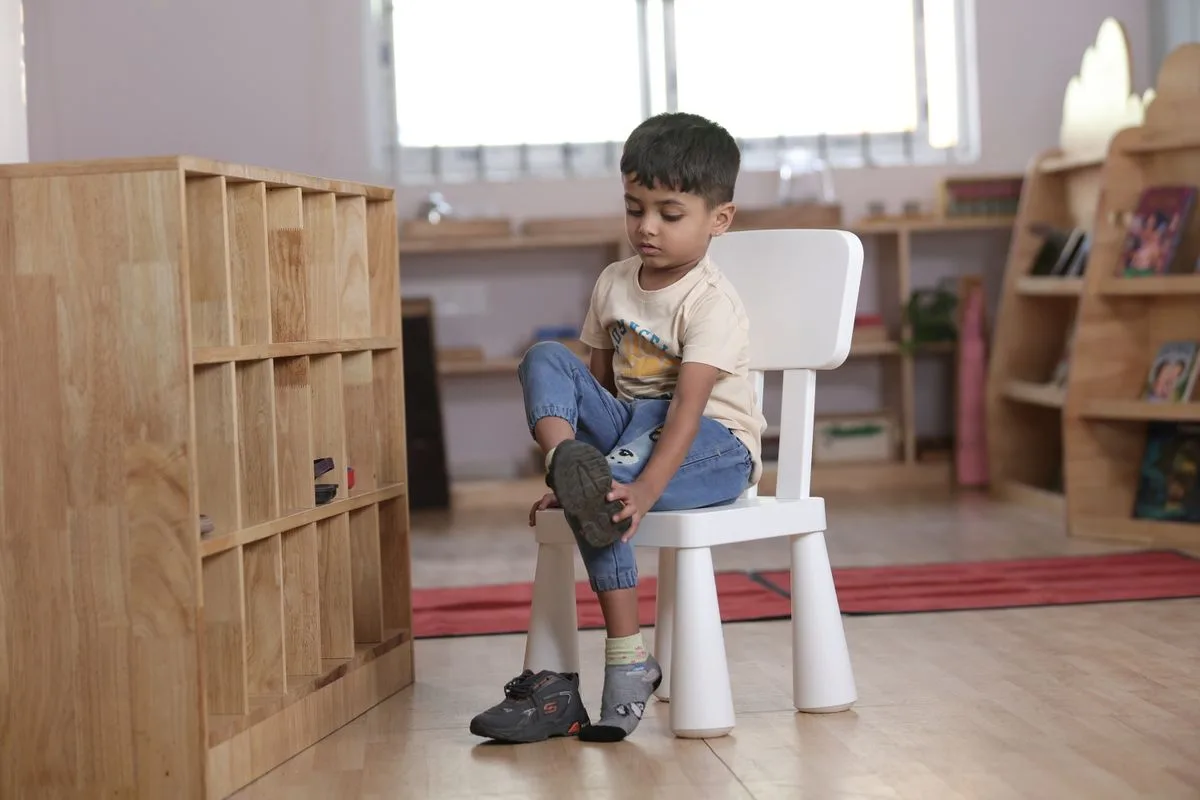
Some battles are won in the shop, not in the hallway. A toddler’s wardrobe should be built for small hands and short tempers. Elastic waists instead of buttons and zips. Wide necklines that go over the head without a fight. Velcro shoes instead of laces. Tops that pull on in one movement, trousers that pull up without a struggle. Every fastening you remove is one less thing to argue about.
Watch for sensory problems, too. Cut out scratchy labels, or buy tag-free clothes. Check the seam across the toes of socks — turn them inside out if you have to, or buy seamless ones. If your child hates jumpers but loves hoodies, buy hoodies. If they will only wear soft leggings, let them wear soft leggings. Nursery does not grade outfits, and a child in clothes they like is a child who gets dressed without a fight.
And let them have a favourite. Most toddlers have one top, or one pair of trousers, that they want every single day. Buy two of them if you can, and wash one overnight. A child who gets to wear their favourite is a child who has already won something, and children who have won something are far more generous about the rest of the morning.
Two Children, One Hallway
If you have two small children to dress, do not try to dress them at the same time in the same place. Stagger it: the younger one first, while the older one finishes breakfast, or the other way round. Give each child their own pile of clothes, in their own place, so there is nothing to fight over. The older child can be given a job — “You are in charge of your own shoes today” — and the younger one can copy them. Our visual weekly schedule for preschoolers helps here too: when both children can see that today is a nursery day, there is less to argue about in the hallway.
Keep the rows of the morning the same for both children, even if the details differ. Same order, same pictures, same calm voice. Children accept different clothes far more easily than different rules, and a hallway where everyone does the same steps in the same order is a hallway with fewer battles in it.

When to Ask for More Help
Most dressing battles are normal, and they fade as your child’s skills grow. But there are times when it is worth asking someone who knows your child — your health visitor, your doctor, or the nursery — for a second opinion. If getting dressed causes extreme distress every single day, if your child seems far behind other children their age in the skills above, or if they cannot bear the feeling of most clothes on their skin, mention it at your next check or appointment. That is not a diagnosis, and it is not a worry to carry alone. It is simply a question worth asking, and professionals would far rather hear it early than late.
The same goes for the mornings themselves. If the whole household is starting every day in tears, and the usual tricks have not helped after a few weeks of steady trying, talk to the nursery about what they see. Sometimes a child who will not get dressed at home gets dressed happily at nursery, and the difference tells you something useful — usually that the problem is the rush, or the audience, rather than the clothes. Our family evening routine and weekend family rhythm can help take the pressure off the rest of the day too, so the morning is not carrying the whole week on its own.
Frequently Asked Questions
What if my child wants to wear the same outfit every day?
Let them, as far as you can. Buy a second one if it is available, and wash the first overnight. A favourite outfit is a comfort, not a problem, and a child who gets to wear what they love will cooperate far more easily with everything else. If the outfit is genuinely wrong for the weather — shorts in January, a heavy jumper in a heatwave — offer the favourite as the top layer, or as the after-nursery outfit, and let them choose between two weather-suitable options for the day.
Should I let them choose their own clothes completely?
Not completely, and not in the morning. A whole wardrobe at 7:40 is too much choice, and it stalls the morning. Choose two outfits the night before, and let your child pick between those two. That way they choose, and you keep the morning moving. As they get older — four, five — you can widen the choice, a drawer instead of two outfits, and then the wardrobe itself.
My toddler gets dressed but everything is back to front. Should I fix it?
Only if it matters for comfort or safety. A back-to-front top is fine for nursery; a back-to-front nappy or twisted shoe is not. Praise the getting dressed, and fix the rest quietly, or not at all. A child who is corrected every time they try will stop trying, and a child who is praised for trying will keep practising until they get it right on their own.
What if they refuse the coat but it is cold outside?
Take the coat with you, and let the cold do the teaching. “Coat on here, or in the car?” is a choice; “You will be cold” is a lecture, and lectures never work on a three year old. Most children ask for the coat within two minutes of feeling the cold, and the child who asks for it has learned something no lecture could teach. If it is genuinely freezing, or your child is ill, then the coat is not a choice — put it on calmly, without a debate, and move on.
How long does the morning battle last?
For most families, the worst of it is between two and four, when the wish for control is at its strongest and the skills are still catching up. It eases as dressing gets easier and choices get wider — usually noticeably by four and a half or five. If you keep the same order, the same choices and the same calm voice, you will see it fade week by week, even if no single morning feels like a victory.
The next time your toddler won’t get dressed in the morning what to do is the same as today: two choices, one calm voice, and clothes laid out last night. The battle is not about a shirt, and it never was. It is a small child saying, in the only way they know how, “Let me do some of this myself.” Give them the choosing, give them the finishing, and give them the time — and the mornings will start to belong to both of you.
This article shares general information for parents, not professional advice. If your child is supported by a teacher, nursery worker or other professional, follow their approach and use the same words at home.
Leave a Reply