
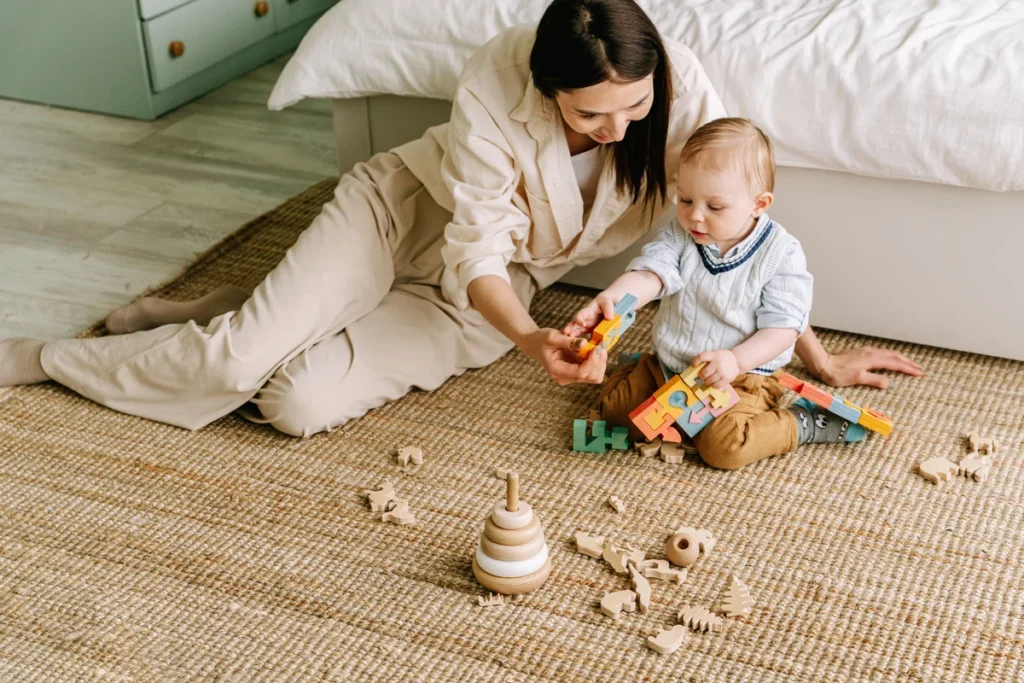
Your toddler has just smacked you across the face, or pushed another child at the park, and you are left wondering what went wrong. It is a shock the first time it happens, and it can feel worse when it keeps happening, especially in front of other parents. But hitting at this age is not a sign that your child is naughty, or that you have done something wrong. It is one of the most common behaviours of the toddler years, and this guide to how to stop toddler hitting gentle parenting by age will show you what to do in the moment, what to say for each age, and how to teach gentle hands without shouting or punishment.
Toddlers hit because their hands work faster than their words. A one-year-old does not yet know that a hit hurts someone else. A two-year-old knows it hurts, but in the middle of a big feeling they cannot stop themselves. A three-year-old is starting to use words, but still reaches for hands first when they are tired, frustrated or overexcited. The response that works is the same at every age — calm, kind and consistent — but the words you use change as your child grows. That is why the advice below is split by age, with short scripts you can say word for word.
Why Toddlers Hit
Before you can stop the hitting, it helps to know what is behind it. Most hitting comes from one of a handful of causes, and each one points to a slightly different response.
| What is behind it | What it looks like | What helps |
|---|---|---|
| They cannot find the words | Hits when they want a toy, a turn or your attention | Give them the words: “Say ‘my turn’.” |
| Big feelings | Hits when angry, tired or overwhelmed | Name the feeling and stay close |
| Testing cause and effect | Hits, then watches your face to see what happens | The same calm response, every single time |
| Tired or hungry | Hitting clusters before meals, naps or bedtime | Fix the need first, teach later |
| Copying what they see | Hits after seeing it at home or on a screen | Show gentle hands, and check what they watch |
| They want a reaction | Hits, then laughs when everyone jumps | Keep your reaction small and boring |
None of these mean your child is being bad on purpose. A toddler who hits is usually a toddler who needs help — with words, with feelings, or with rest. Our guide to why toddlers say no covers the same drive for independence from a different angle, and it helps to see the two together: the child who says no with their mouth is often the same child who says it with their hands.
The Gentle Response That Works at Every Age
Whatever your child’s age, the in-the-moment response has three parts, and they work in order. First, stay calm and stop the hit kindly — catch the hand, or move your face away, without grabbing hard or raising your voice. Second, name what happened in a few short words: “Hitting hurts. I won’t let you hit.” Third, show the gentle version: take their hand and stroke your arm softly while you say “gentle hands”. Then move on. The teaching happens in the calm minutes afterwards, not in the middle of the upset.
Short and boring is the point. A long lecture in the middle of a meltdown teaches nothing, because a flooded toddler cannot listen. Say the same few words every time, and your child will start to know what comes next, which is reassuring even when they protest. If you need ideas for staying calm yourself, our positive discipline examples show the same calm-first approach in everyday moments.

Age 1: Gentle Hands Start With You
At one, your child is not hitting to be unkind. They are exploring what hands do: a pat, a grab and a smack all feel the same to them, and they have no idea that one of those hurts. Teaching gentle hands at this age is almost entirely physical, and the first part of how to stop toddler hitting gentle parenting by age is simply showing them, over and over, what gentle feels like.
When your baby hits, catch the hand gently, hold it against your cheek and say “gentle” in a soft voice while you stroke. Then give the hand something to do: a soft toy, a block, a spoon to bang on a pot. Banging is fine — hands need a job, and a drum is a better job than your face. Keep your face close and your voice warm, because a one-year-old learns from your tone far more than from your words.
Repeat the same small routine every time. One-year-olds learn by repetition, and after a few weeks you will often see your child pause, look at your face and soften their hand on their own. That pause is the lesson working.
Say this: “Gentle.” (Stroke their hand on your arm.) “Hands are for patting, like this.”
Age 2: Big Feelings, Short Words
Two is the peak age for hitting, and it is also the age when it hurts most, because two-year-olds are strong enough to sting and honest enough to hit the people they love most. The feelings at two are enormous and the words are still small, so hands do the talking. At two, how to stop toddler hitting gentle parenting by age means keeping your words very short and your body very calm, because your child is borrowing your calm until they have some of their own.
When your toddler hits you in the face — the classic toddler-hitting-parents-in-face moment — what to do is simple: turn your face away, hold both hands gently in yours and say, “I won’t let you hit my face. That hurts.” Then put them down or step back for a moment. You are not punishing them; you are protecting yourself, and showing them that hitting ends the closeness they wanted.
After the moment passes, usually within a minute or two, come back to it briefly. “You were cross because the toy was taken. You can say ‘mine’ or come to me.” Then offer a do-over: “Let’s try gentle hands,” and guide their hand to pat your arm. Do-overs work far better than apologies at two, because they practise the right action instead of just naming the wrong one. Our guide to toddler tantrums uses the same stay-close, short-words approach when the feeling is bigger than hitting alone.
Say this: “Stop. Hitting hurts.” (Hold their hands.) “You are cross. I am here.” (Pause.) “Gentle hands, like this.”
Age 3: Words Are Ready, Even When Feelings Are Not
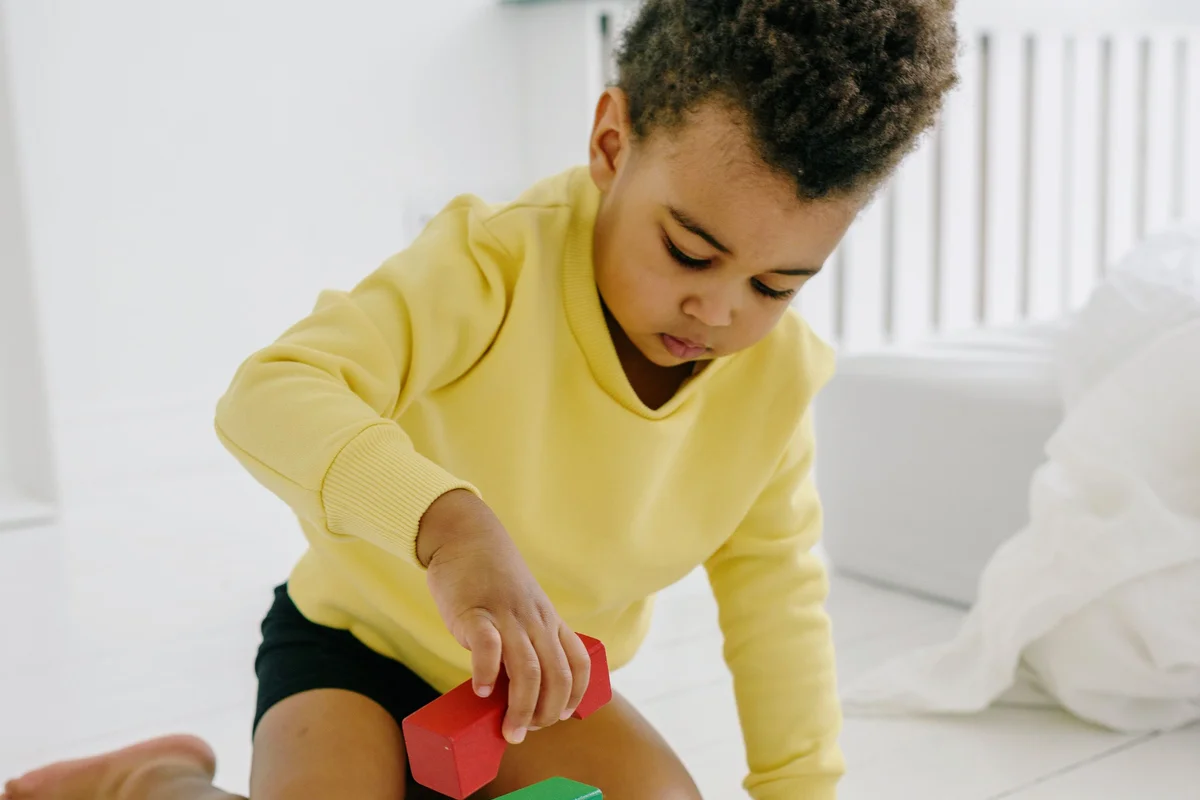
By three, most children can tell you what they want — when they are calm. When they are not calm, the hands still win. The good news is that three-year-olds can practise, and practice is what finally replaces hitting.
Practise at a quiet time, not after a hit. Use a doll or a teddy: “Bear wants the car. What can Bear say?” Let your child supply the words — “my turn, please” — and cheer the answer. Then practise the repair too: “Bear hit. What can Bear do now?” A three-year-old who has rehearsed “sorry, are you okay?” with a teddy will find it far easier to say it to a real child at nursery. If your child is testing every limit at once, our guide to setting boundaries with toddlers shows how to hold the line kindly without turning every day into a battle.
At three you can also start giving choices, which cut hitting off before it starts. “You can play with the red car or the blue car — you choose.” A child who has chosen feels in control, and a child who feels in control hits less. Keep the choices small and real, and follow through on the one they pick.
Say this: “You are angry. It is okay to be angry. It is not okay to hit. Say: ‘I am angry, I need space.'”
What to Do in the Moment — and What to Avoid
| Do | Don’t |
|---|---|
| Stay calm and stop the hand kindly | Hit back, even lightly — it teaches that hitting is what grown-ups do |
| Use the same short line every time | Laugh it off — a big reaction rewards the behaviour |
| Comfort your child once the moment passes | Lecture during the meltdown — a flooded toddler cannot listen |
| Practise gentle hands and words when calm | Label your child “naughty” or “a hitter” — labels stick |
| Repair with actions: a pat, a shared toy | Shame them in front of others or force a sorry |
The label is the one to watch most carefully. A child who hears “you are a hitter” often enough starts to believe it. Describe the action, not the child: “hitting hurts” instead of “you are naughty”. The same goes for the repair: a real repair — a pat, a shared toy, an “are you okay?” — teaches far more than a forced apology ever will.

When Hitting Happens at Nursery or With Other Children
Hitting at nursery is embarrassing, but it is also very common, and nursery staff have seen it a hundred times. Tell them what you are doing at home — the same short line, the same gentle-hands practice — so your child hears one message in both places.
If your child hits another child, go to the other child first. Check they are okay, in front of your child, so your child sees that hurt matters. Then turn to your child with the same calm line you use at home. Do not force a sorry in the moment; a forced apology teaches nothing. A real repair can come a few minutes later, when the feeling has passed.
When to Talk to Your Doctor
Most toddler hitting fades with age, practice and a steady response. But there are times when it is right to ask for help rather than wait. Talk to your doctor or health visitor if the hitting is frequent and intense, if your child often hurts themselves or others badly, if they seem unable to calm down at all, if the behaviour started suddenly after a big change, or if you are worried about their development or speech. The American Academy of Pediatrics explains aggressive behaviour in toddlers clearly, including when it is typical and when it is worth raising with your child’s doctor.
Ask for help for yourself too. Being hit every day is wearing, and feeling frustrated about it does not make you a bad parent. Talking it through — with your doctor, your health visitor, or another parent who has been there — often brings the one idea you had not tried yet.

Frequently Asked Questions
Is it normal for a toddler to hit? Yes. Hitting peaks around age two and is one of the most common toddler behaviours. Most children grow out of it as their words catch up with their feelings, usually between three and four.
Should I hit my toddler back to show them it hurts? No. Hitting back teaches that hitting is how adults solve problems, and it usually makes the behaviour worse, not better. A calm hand-stop and the same short words every time work better.
My toddler only hits me, never anyone else. Why? Because you are their safest person. Toddlers save their biggest feelings for the person they trust most. Keep the same calm response, and save your own recovery for later.
How long does it take for hitting to stop? It depends on the age and the cause, but most families see real change within a few weeks of a steady, same-every-time response. Expect setbacks on tired days, after illness or big changes — they are normal, not a sign that you have failed.
What if my toddler hits other children at nursery? Use the same script at home and at nursery, go to the hurt child first, and practise gentle hands and words when everyone is calm. Talk to the nursery staff so you are all using the same approach.
A Simple Day, Step by Step
On a hard day, keep it simple. Stop the hand kindly, say the same short line, name the feeling, and show the gentle version. Practise the words when everyone is calm, give choices before the flashpoint, and repair afterwards with actions, not forced apologies. Expect wobbles — they are part of learning, not proof that it is not working.
Once you know how to stop toddler hitting gentle parenting by age, the hard moments feel less frightening, even when they still sting. Your toddler is not being bad: their hands are simply ahead of their words, and with a calm response, a little practice and a lot of patience, the gentle hands arrive. Most parents look back and find the hitting phase lasted far less time than it felt like in the middle of it.
This article is general information for parents, not medical advice. Every child is different, and if you are worried about your child’s behaviour, development or health, talk to your doctor or health visitor.
Leave a Reply