
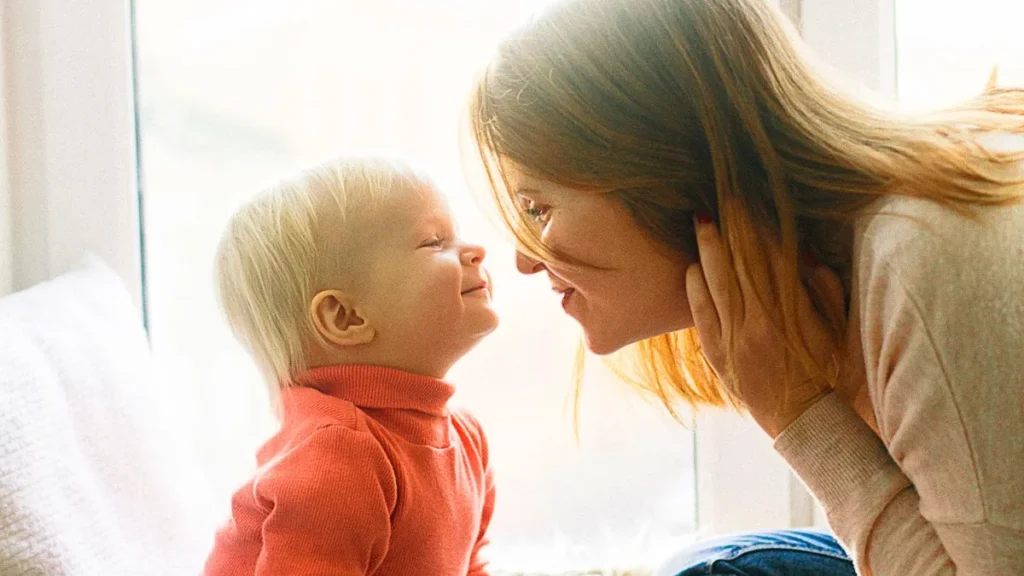
If you counted how many times you say “no” in one day, the number might shock you. “No, don’t touch that.” “No, stop it.” “No, no, no.” The hard part is that the more a toddler hears it, the less it seems to work. Young children learn much faster when we tell them what they can do, not just what they can’t. That is where positive discipline examples come in. Below you will find nine simple phrases you can swap in right away, plus easy tips to help them stick.
In This Guide
Why “No” Stops Working
Toddlers are not being bad when they grab, climb or throw. They are learning how the world works, one test at a time. The trouble with “no” is that it does not teach them anything new. When you shout “Don’t run!”, your child mostly hears the fun word at the end: “Run!”
There is another problem too. If “no” is said all day long, it loses its power for the moments that really count, like a hot stove or a busy road. Saving your strong “no” or “stop” for real danger keeps it strong. For the rest of the day, gentle discipline works better: short, clear words that show your child what to do instead.
This does not mean there are no rules. It means the rules are said in a kind, firm way, with words a small child can actually follow.

9 Positive Discipline Examples to Try Today
Pick two or three of these to start with. Say them the same way each time, and your child will soon know just what you mean. You will spot a pattern as you read: say what to do, keep it short, and add a choice or a small job for busy hands when you can.
1. Instead of “Don’t run off!” say: “You can hold my hand, or you can ride in the cart.”
Giving two safe choices makes a toddler feel in control, so there is less to fight about. Both choices are fine with you, so it is a win either way.
2. Instead of “Don’t climb on that!” say: “Feet stay on the floor. You can climb at the park.”
You have said what to do now, and where the fun thing can happen later. That small promise helps a lot.
3. Instead of “Don’t throw food!” say: “Food stays on the table. If you are done, say ‘all done’.”
Then teach the words or a simple sign for “all done.” Throwing is often just a toddler’s way of saying the meal is over.
4. Instead of “Don’t hit!” say: “I won’t let you hit. Hands are gentle. Here, squeeze this pillow.”
You stop the hitting, you name the rule, and you give those busy hands a job. This works for pushing and biting too.
5. Instead of “Don’t draw on the wall!” say: “Crayons are for paper. Let me get you a big sheet.”
Your child still gets to draw, just in the right place. Keep paper close by in the rooms where this happens most.

6. Instead of “Stop whining for a snack!” say: “You can have apple slices or cheese. You pick.”
A choice between two healthy foods ends most snack battles fast. Keep the choices to two, or it can feel like too much for a small child.
7. Instead of “Share right now!” say: “She is using the truck. When she is done, it is your turn. Let’s find a car for now.”
Toddlers are still learning to wait. Telling them the turn will come, and helping them find something else, makes waiting easier.
8. Instead of “Go to bed, now!” say: “Two books, then lights out. Which two do you want?”
A set routine plus a small choice makes bedtime feel safe and known. The rule stays the same, but your child gets a say inside it.
9. Instead of “Stop screaming!” say: “That is an outside voice. Let’s take it to the yard.”
Kids need to be loud sometimes. Showing them where loud is okay teaches more than telling them to be quiet all day.
How to Make These Phrases Stick
New phrases work best when you keep them short and say them the same way each time. Get down at your child’s level, look them in the eye, and use a calm, warm voice. You do not need to explain a lot. A few clear words beat a long talk every time.
It also helps to pair these phrases with kind and firm limits. Our guide to setting boundaries with toddlers shows how to hold a rule without a fight. Doctors back this calm approach too — you can read the American Academy of Pediatrics’ guide to disciplining your child for more on why it works.
And on the days you slip and shout anyway? You are human, and it will happen. Just say sorry, give a hug, and start again. Owning your own mistakes is one of the best lessons you can teach. Your child learns that big feelings are normal, that things can be fixed after a row, and that love does not go away when someone gets cross. That lesson is worth more than a perfect record.

Give it time. Your child may test the new words for a few days, and that is normal. Stay calm, repeat the same phrase, and follow through in the same kind way. Most parents find that discipline without yelling starts to feel easier within a week or two, and the house feels calmer for everyone.

Frequently Asked Questions
Does positive discipline mean there are no rules?
No, not at all. The rules stay, but they are given in a kind and clear way. Your child learns what to do, not just what to stop doing.
What if my child still does not listen?
Stay calm and repeat the same short phrase, then gently help them follow through. Change takes days, not minutes. If you are kind and firm each time, it will start to sink in.
At what age can I start using these phrases?
You can start as soon as your child is on the move, around their first birthday. Short phrases and simple choices work well for babies, toddlers and preschoolers alike.
Is a time-out part of positive discipline?
A short, calm break can help some children cool down, but it is not the main tool. Teaching, choices and calm limits do most of the work day to day.
What should I say when my child does the right thing?
Notice it out loud, right away. A warm “You put your shoes on all by yourself!” tells your child the new way works, and they will want to do it again.
A Calmer Way to Say It
You do not need to be a perfect parent to use positive discipline examples like these. Just pick a few phrases, say them with love, and use them again and again. Day by day, your child learns what to do, and you get to save your big “no” for the moments that truly need it. To help the good moments grow even more, read our tips on praising your child the right way.
Leave a Reply