
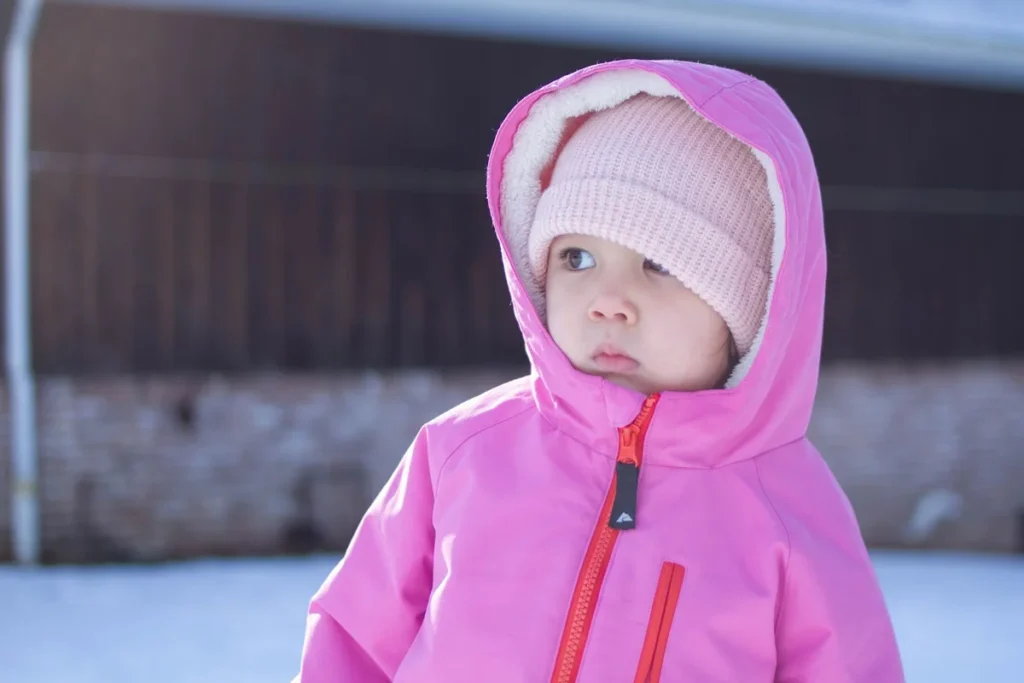
A toddler does not stand still in winter. They run, climb, fall over in the snow, pull their mittens off, and then want to do it all again. That is what makes dressing them feel so much harder than dressing a baby: the clothes have to keep up with a child who is always moving. The good news is that the pattern is simple once you know it, and this guide to how to dress toddler for winter layers chart keeps it simple: thin layers you can add or take away, one at a time, for play, for the car, and for nursery.
Toddlers lose heat faster than adults because their bodies are small, and they cannot always tell you when they feel cold. A toddler who is busy playing may not notice cold hands or a damp jumper until they are already chilly and grumpy. So the aim is steady warmth that still lets them move: enough layers to stay warm, but not so many that they cannot climb, run, or bend down to pick up a snowball. If you also have a baby at home, our guide to how to dress a newborn in winter layers has a chart for the littlest ones too.
The One Rule That Makes Everything Simple
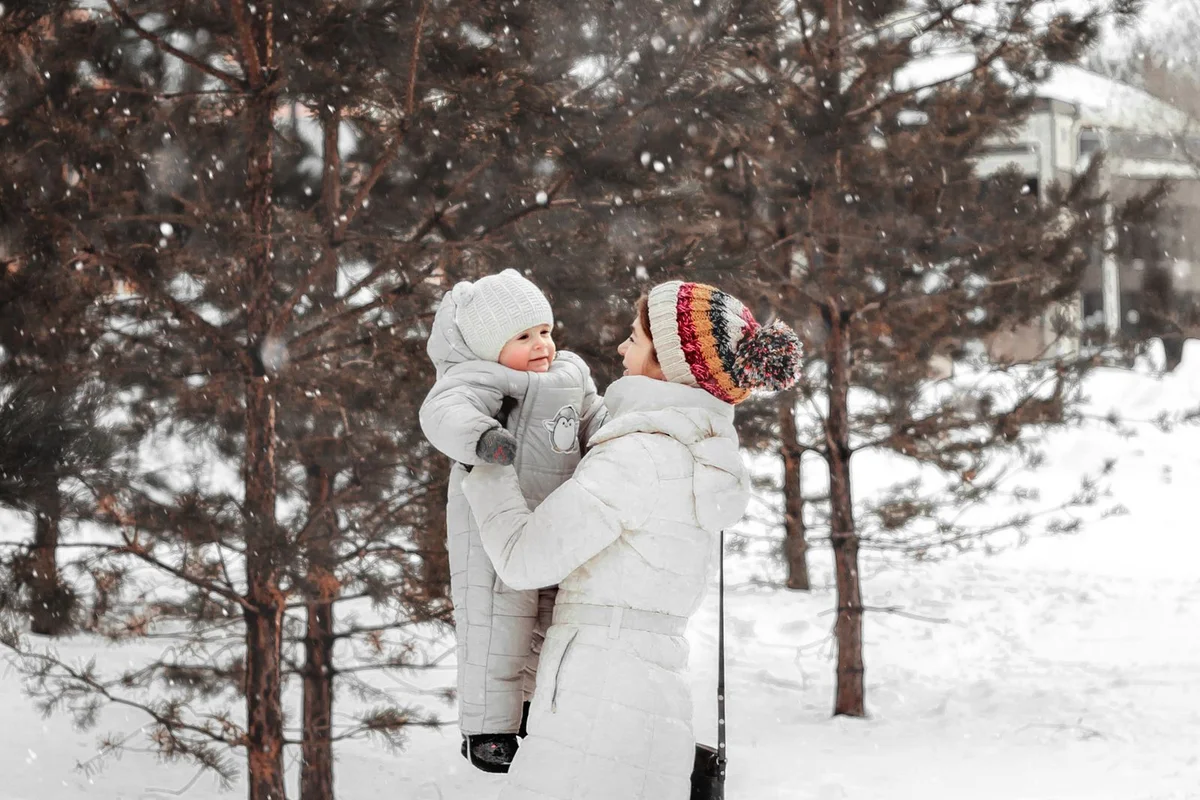
Dress your toddler in one more layer than you are wearing to feel comfortable in the same place. If you are happy in a long-sleeved top and a jumper indoors, your toddler will probably need a vest, a long-sleeved top, and trousers with warm socks. If you put your coat on to go outside, your toddler will need a coat or snowsuit as well, plus a hat, mittens, and warm boots.
Thin layers work better than one thick one. Air trapped between layers holds warmth, and you can peel one layer off when a warm shop or a heated nursery room makes your toddler too hot. One heavy coat gives you no way to adjust, and a sweaty toddler who then goes back out into the cold can chill quickly. Layers also make life easier at nursery drop-off, where the room is warm but the walk there is not.
Let your toddler help choose between two options when you can: the red hat or the blue hat, the mittens with bears or the plain ones. A small choice often stops the daily argument about getting dressed, and a toddler who picked their own hat is far more likely to keep it on.
The Layer-by-Layer Chart
The how to dress toddler for winter layers chart below is a starting point, not a strict rule. The real test is always your child: feel their chest or the back of their neck, and add or remove a layer from there. Cold hands and a cold nose are normal in winter and do not mean your toddler is cold all over.
| Where you are | What to put on |
|---|---|
| Warm indoors, about 20 to 22 degrees C (68 to 72 F) | A long-sleeved top and trousers with socks, or a vest under a long-sleeved top. No hat indoors. |
| Cool indoors, about 18 to 20 degrees C (64 to 68 F) | A vest, a long-sleeved top, trousers, warm socks, and a soft jumper or cardigan. Slippers indoors if the floor is cold. |
| Outside, mild cold, about 10 to 15 degrees C (50 to 59 F) | The indoor layers, plus a light coat, a soft hat, and warm socks with closed shoes or boots. |
| Outside, cold, about 0 to 10 degrees C (32 to 50 F) | The indoor layers, plus a warm coat or snowsuit, a hat that covers the ears, mittens, and waterproof boots with warm socks. |
| Outside, very cold, below 0 degrees C (32 F) | All of the above, with a warm snowsuit, a balaclava or a hat plus a scarf, waterproof mittens, and boots. Keep outings short and check your toddler often. |
| In the car | Thin, close-fitting layers only: a vest, a long-sleeved top, and trousers. No bulky coat under the harness. Put the coat on over the straps once your toddler is buckled in. |
| At nursery | The cool-indoors layers for the room, plus a labelled coat, hat, mittens, and boots for outdoor play. Pack one full spare set of clothes in their bag. |
| At night | A long-sleeved pyjama top and bottoms, or a sleep sack over pyjamas, with socks if the room is cool. No hat for sleep, and keep the room cool rather than warm. |
Temperatures are only a guide. A windy day feels much colder than a still one, and a toddler who is running around makes their own warmth. Check the chest, not the hands, and trust what you feel: warm and dry means you have it right.
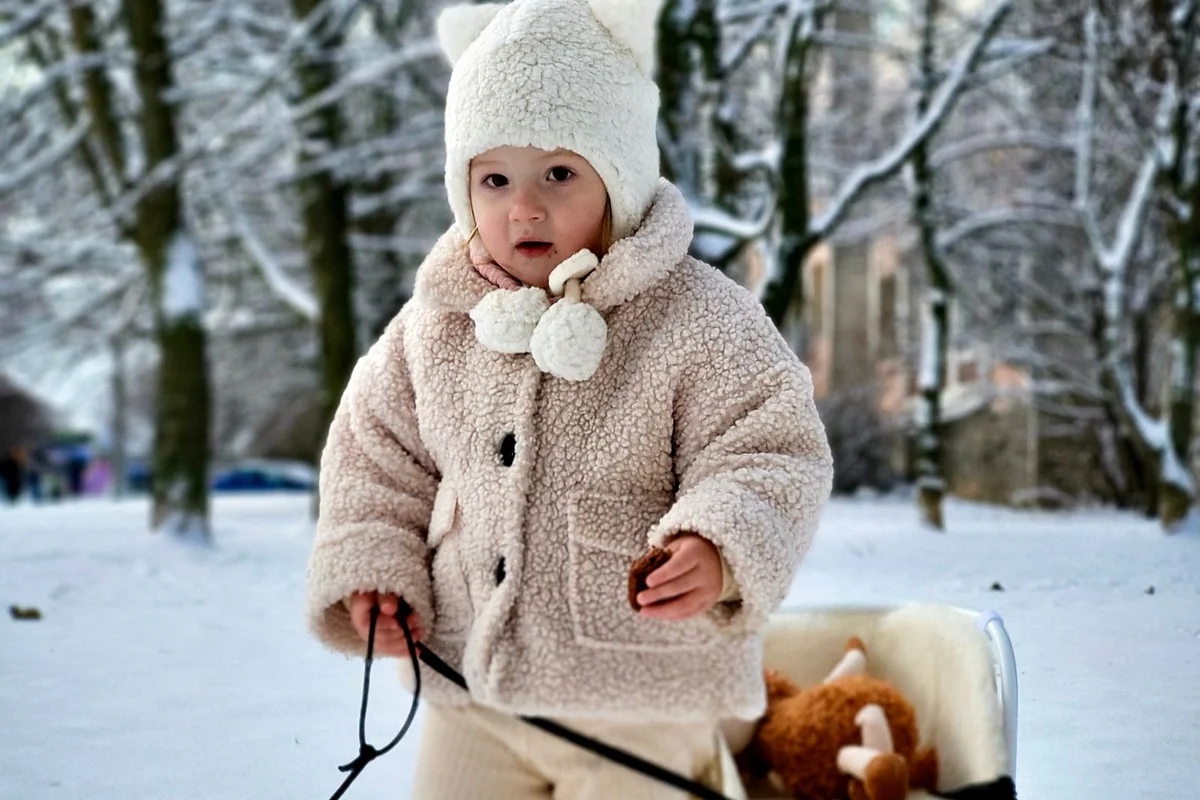
Dressing for Active Play
Snow play is where winter dressing earns its keep. A toddler in the snow needs clothes that can get wet, because they will sit in it, fall in it, and try to eat it. A waterproof snowsuit or a waterproof coat with waterproof trousers is worth far more than a pretty coat that soaks through in ten minutes. For nursery and the park, a one-piece snowsuit is usually the simplest choice: there is no gap between jacket and trousers for snow to get down the back, and in the morning there is only one zip to do up.
Mittens beat gloves for toddlers. Fingers stay warmer together, and mittens are easier to pull on. Buy two pairs, because one pair will always be wet, lost, or left at nursery. Mittens on a string threaded through the coat sleeves save a surprising amount of time and searching, and most toddlers do not mind the string once they are used to it. The same goes for boots: choose boots your toddler can stand in without wobbling, with a grip that holds on snow and ice, and room for one thick pair of socks but not two, because two pairs can squeeze the feet and make them colder.
Pack a dry spare set for the journey home: socks, mittens, and a top at least. A toddler who has played hard in the snow will be damp even in good waterproofs, and dry clothes for the car ride home stop a happy morning turning into a cold, grumpy one. On days when the weather keeps you inside instead, our screen-free indoor activities give you 25 ways to burn off that same energy at home, and our sensory play ideas work well for a quiet afternoon after a cold morning outside.
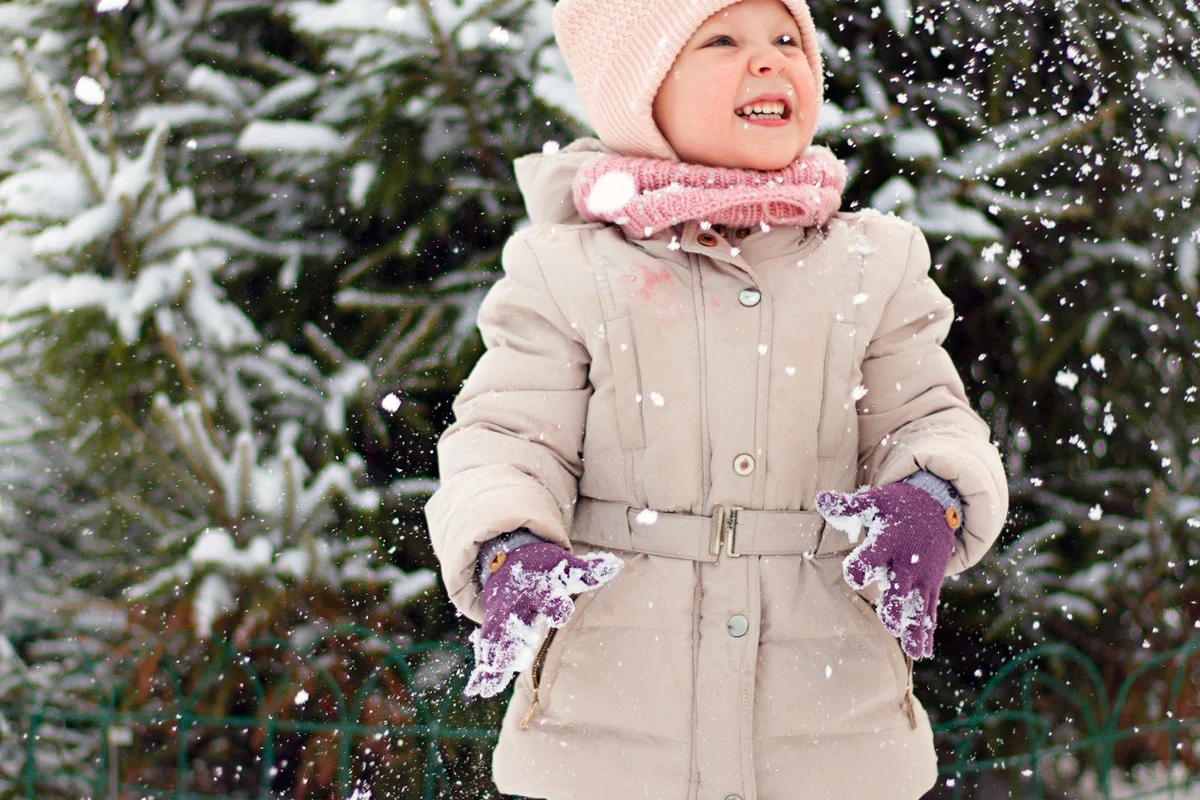
The Car Seat Rule
For the car, the how to dress toddler for winter layers chart says thin layers only: a vest, a long-sleeved top, and trousers under the harness, with no bulky coat or snowsuit underneath. A puffy coat stops the harness from sitting snugly against your toddler’s body, and in a sudden stop the coat squashes flat and leaves the straps too loose. Buckle the harness first, pull it snug so you cannot pinch any slack at the shoulder, and then put the coat on backwards over the straps, or tuck a blanket over your toddler’s legs.
Warm the car up before you leave if you can, and keep a blanket and a spare hat in the car for the walk at the other end. A toddler who has been sitting still in a car seat cools down faster than one who has been running around, so the coat goes back on as soon as they climb out. The American Academy of Pediatrics has clear cold weather safety tips for children that cover car seats, frostbite, and how long children should play outside in the cold, and they are worth a read before the first real freeze.
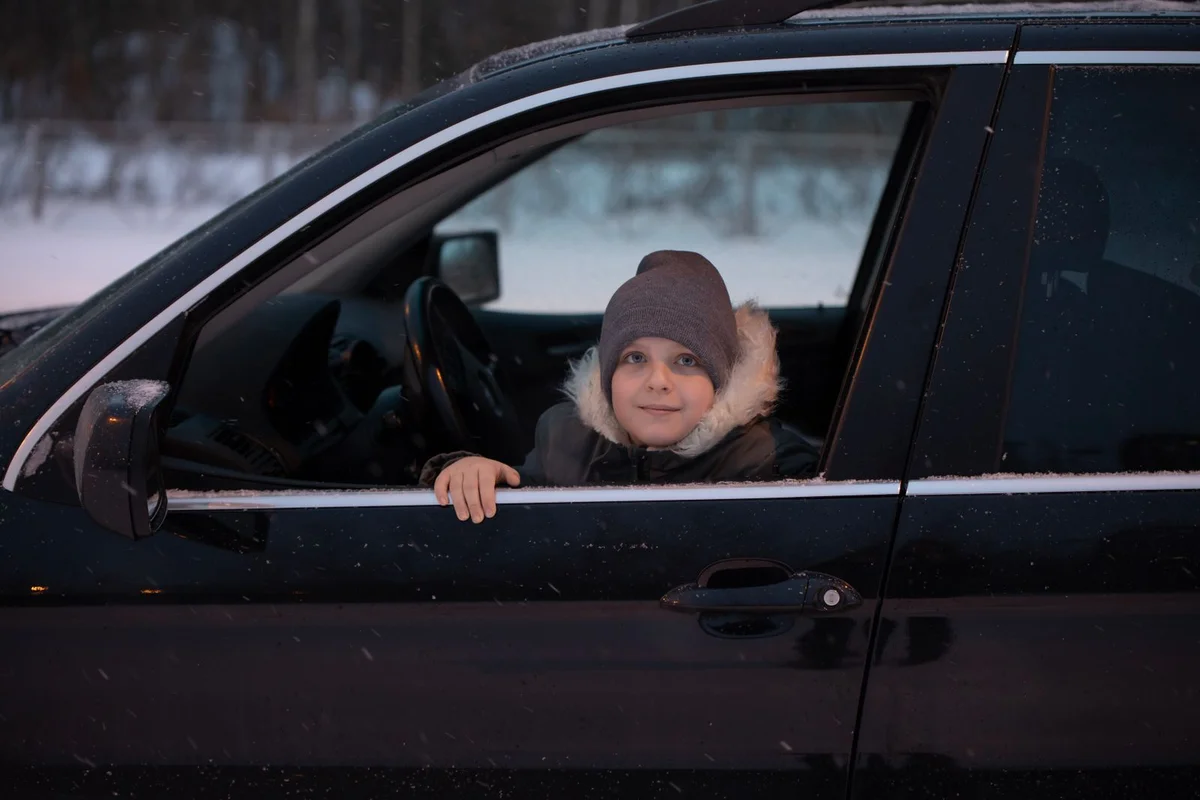
Nursery Days
Nursery in winter means two wardrobes in one day: warm enough for the walk and the garden, light enough for a heated playroom. Dress your toddler in the cool-indoors layers for the room, and send the outdoor kit separately in their bag: a labelled coat, hat, mittens, and boots. Labels matter more than you think. Every toddler seems to own the same navy coat, and a name tag is the difference between your coat coming home and someone else’s coming home instead.
Ask the nursery what they expect, because every setting is slightly different. Some want wellies for the garden and indoor shoes for the classroom. Some ask for a full spare set of clothes, including socks and underwear, every single day. Pack the spare set in a named bag that stays at nursery, and check it on Friday: wet spare clothes left in a bag all weekend are a Monday morning surprise nobody needs.
Choose clothes your toddler can manage with a little help. A coat with a big zip they can pull themselves, boots they can step into, and mittens rather than fiddly gloves all help them feel proud instead of frustrated. Nursery staff will thank you too: a room full of toddlers in complicated coats takes a very long time to get ready for the garden.
How to Tell If Your Toddler Is Warm Enough
The chest check is the one to trust. Slip a hand inside your toddler’s coat and feel their chest or the back of their neck. Warm and dry means they are fine. Cool means add a layer. Sweaty or damp means take a layer off straight away and let the skin dry before you go back outside, because a sweaty toddler who goes back out into the cold can chill quickly.
Cold hands, a cold nose, and red cheeks are normal in winter and do not mean your toddler is cold all over. Hands get cold because they are out in the air, touching snow and metal railings. If your toddler is happy, playing, and talking normally, they are warm enough. A toddler who has gone quiet, is shivering, or wants to be carried is telling you they are cold, even if they cannot say it in words yet.
Watch for wet clothes. Snow gets inside boots and cuffs no matter how good the waterproofing is, and wet socks or a wet vest will chill a toddler faster than cold air will. Change anything damp for dry clothing as soon as you are indoors, and dry the boots and mittens properly before the next outing, or they will still be damp in the morning.
Frequently Asked Questions
How many layers should a toddler wear in winter? As a starting point, one more layer than you are wearing. Indoors that is usually a vest, a long-sleeved top, and trousers. Outside, add a coat or snowsuit, a hat, mittens, and boots. Then check the chest and adjust.
Can my toddler wear a coat in the car seat? No, not a bulky coat or snowsuit under the harness. Dress your toddler in thin layers, buckle the harness snugly, and then put the coat on over the straps or tuck a blanket over their legs. This keeps your toddler warm without loosening the harness.
Does my toddler need a hat indoors? No, not usually. Hats are for outside and for cold rooms. Indoors, and always for sleep, leave the hat off so your toddler can lose extra heat through their head and stay at a comfortable temperature.
What if my toddler refuses to wear a coat? Offer two choices and let them pick, keep the coat somewhere they can see it, and put your own coat on first so getting dressed feels like something everyone does. A coat with a picture they love, or one they helped choose, is worn far more happily than one that simply appears on a hook.
What about wet mittens and socks? Change them as soon as you are indoors. Pack a spare pair of mittens and socks in the changing bag or the nursery bag every day, and dry the wet pair fully before the next outing. Damp mittens chill small hands very quickly.
A Simple Morning Routine
Winter mornings get easier with a little routine. Lay out the vest, top, trousers, socks, hat, mittens, and outer layer the night before, so you are not hunting through drawers with a hungry toddler in your arms. Keep the boots by the door and a spare set of mittens in the coat pocket, where you can actually find them.
Before you leave the house, do the chest check. Warm and dry means you are ready. When you come home, take the outdoor layers off first and hang them up to dry. At night, keep the room cool and the bedding light. Once you have used the how to dress toddler for winter layers chart a few times, cold mornings stop feeling like a puzzle and become just another small part of the day.
This article is general information for parents, not medical advice. Every child is different, and if you are worried about your child’s temperature or health, talk to your doctor or health visitor.

Leave a Reply