

Every parent knows the moment. You hand your toddler the tablet for five quiet minutes while you cook dinner, and forty minutes later they are still watching, and taking it away feels like starting an argument you did not plan for. The problem is rarely the screen itself. It is that nobody agreed beforehand how much is enough, what counts as a good show, and when the screen goes off. That is what this screen time rules for toddlers by age chart is for: one clear page of limits for each age, so the whole family knows the plan before the tablet comes out.
Small children do not need a lot of screen time, but they do need clear rules. A two-year-old and a four-year-old are very different viewers, and what works for one will not work for the other. The chart below follows the age guidance from the American Academy of Pediatrics, and the rest of this article turns each row into simple family rules you can actually keep.
How to Use the Chart
Start with your child’s age and read across that row. That is your daily limit, the kind of thing worth watching, and your job as the parent. This screen time rules for toddlers by age chart is built to be used, not memorised: stick it on the fridge, and when a show ends, the chart has already made the decision for you. If your child is between two rows, use the younger row until their next birthday. Younger is always the safer choice with screens.
One thing matters more than the exact number of minutes: how the time is spent. Ten minutes of a slow, friendly show watched together is worth far more than an hour of fast, noisy videos watched alone. Keep that in mind as you read each row.
The Chart, by Age
| Age | How much a day | What to watch | Your job |
|---|---|---|---|
| Under 18 months | No screen time, except video calls | Video calls with grandparents and family only | Sit with your child and talk to the person on the screen |
| 18 to 24 months | A few minutes of one good show, with you | Slow, simple programmes with songs and friendly faces | Watch together, name what you see, and stop after one show |
| 2 to 3 years | Up to 1 hour of good-quality shows | Slow-paced shows about numbers, words, feelings and kindness | Choose the shows, sit nearby, and talk about the story after |
| 4 to 5 years | About 1 hour of good-quality shows | Shows and simple games that ask your child to answer, sing or move | Help your child choose, keep the limit firm, and plan what comes next |
If your child already watches more than the chart says, do not cut it all in one day. Shave off ten minutes every few days and fill the gap with something easy: a puzzle, a walk to the park, or helping you in the kitchen. Small steps stick. Sudden bans do not.

Under 18 Months: Video Calls Only
Babies under 18 months learn from faces, voices and hands they can touch, not from a flat screen. A video call with a grandparent is the one exception, because your baby can see a real face, hear a familiar voice, and watch you smile and talk back. Keep calls short, hold your baby close, and point at the screen and name the person: “Look, it is Grandma!” When the call ends, the screen goes away. There is no need for baby videos, baby apps or “educational” cartoons at this age. Your baby’s best learning tools are your face, your voice and the room around them.
18 to 24 Months: One Short Show, Together
From around 18 months, a few minutes of a good show is fine, as long as you watch it together. Pick one short programme with slow pictures, simple words and songs, and sit with your child while it plays. Point at things on the screen, repeat the words, and sing along. When the show ends, turn the screen off and talk about it for a minute: “The duck found his mummy!” That little chat is where the learning happens. If your child asks for another show straight away, that is normal. Say the same words every time: “One show, then we play.” The same words, said calmly, work better than a new reason every day.
2 to 3 Years: One Hour, and You Choose the Shows
Two- and three-year-olds can watch up to an hour a day of good-quality shows, and you should be the one who chooses them. Look for programmes that move slowly, use kind voices, and teach one small thing at a time: counting, colours, sharing, or naming feelings. Fast cartoons with shouting, flashing colours and non-stop jokes are hard for a small child to follow, and they often leave a toddler wound up and grumpy afterwards. If a show makes your child shout, hit or cry more than usual, drop it for a week and try something slower. You will know within a few days whether it was the show.
At this age, watching with your child still matters most. You do not need to watch every minute, but stay close enough to hear it, and ask one or two easy questions after: “What was the bear looking for?” If your child cannot answer, that is fine too. The question itself teaches them that watching is something you talk about, not something that just washes over them.

4 to 5 Years: Let Them Help Choose, and Hold the Limit
Four- and five-year-olds can start to help choose what they watch, inside the limits you set. Give them two good choices: “Do you want the counting show or the animal show?” A choice makes the limit feel fair, and it stops the daily argument about which programme comes next. The daily amount stays about an hour of good-quality shows, and at this age simple games that ask your child to answer, sing along or copy a movement can be part of that hour too.
Children this age also start to notice when other children watch more than they do. If your child says “My friend watches all day,” keep your answer short and kind: “In our family, one hour is enough, and then we do something else.” You do not need to win the argument. You just need to hold the same line tomorrow.
Picking Good Shows: Three Quick Checks
Not every show with a smiling cartoon is a good show. Before you add a new programme to the list, run these three checks. First, watch five minutes yourself. If it feels fast, loud or mean, it is not for a toddler. Second, ask what your child will learn or feel: a new word, a kind idea, or a song they can sing again. Third, check the ending. A good toddler show ends calmly, with the problem solved and the friends together. If it ends with a chase or a fright, save it for when your child is older.
Advertisements and auto-play are the two things that quietly break every rule. Turn off auto-play wherever you can, so one show does not roll into the next before you have noticed. If an app shows adverts, use a version without them, or pick a show from a service you trust. A toddler cannot tell an advert from a programme, and they should not have to.

Screen-Free Zones That Make the Rules Easy
Rules work best when the house helps you keep them. Pick two screen-free places and keep them sacred: the dinner table and the bedroom. No screens at meals means your child learns to eat, talk and sit with the family, and it gives you a daily half hour of real conversation. No screens in the bedroom means bedtime is not a negotiation, and your child is not falling asleep to a glowing screen. Charge tablets in the kitchen or the living room, out of sight at night, and the morning starts without a screen in anyone’s hand.
The third zone is the car. Short trips do not need a screen, and most children will happily watch the world go by, sing, or tell you about their day if there is nothing else to watch. For long journeys, a screen for part of the trip is fine. Decide the deal before you set off: “One show, then we play eye-spy.” A deal made before the trip is much easier to keep than one made in the middle of it.
Bedtime: Screens Off One Hour Before Sleep
Screens and sleep do not mix. The light and the excitement of a show can keep a small child wired long after the tablet is off, and a tired toddler is a grumpy toddler the next morning. Set a simple house rule: screens off one full hour before bedtime. That hour is for the bath, the story, the quiet play and the goodnight cuddle. If your child asks for “just one more,” the answer is the same every night: “Screens are sleeping now. We are reading a story.” Children test a rule a few times, and then they stop testing it, as long as the answer never changes.
When Screen Time Is Not Working: Five Signs to Watch
Every child has a bad screen day now and then, but if you keep seeing the same signs, the rules probably need a reset. First, your child melts down every single time the screen goes off. Second, they ask for the screen first thing in the morning and last thing at night. Third, they would rather watch than play, eat or go outside. Fourth, they seem jumpy, tired or tearful after watching, most days. Fifth, you are using the screen to get through every meal, car ride and queue. None of these means you have done anything wrong. They are simply your signal to pull the limit back to the chart, cut ten minutes at a time, and fill the freed time with play, outside time and your company. If you are worried about your child’s behaviour or development, talk to your doctor or health visitor, who can help you work out what is right for your child.
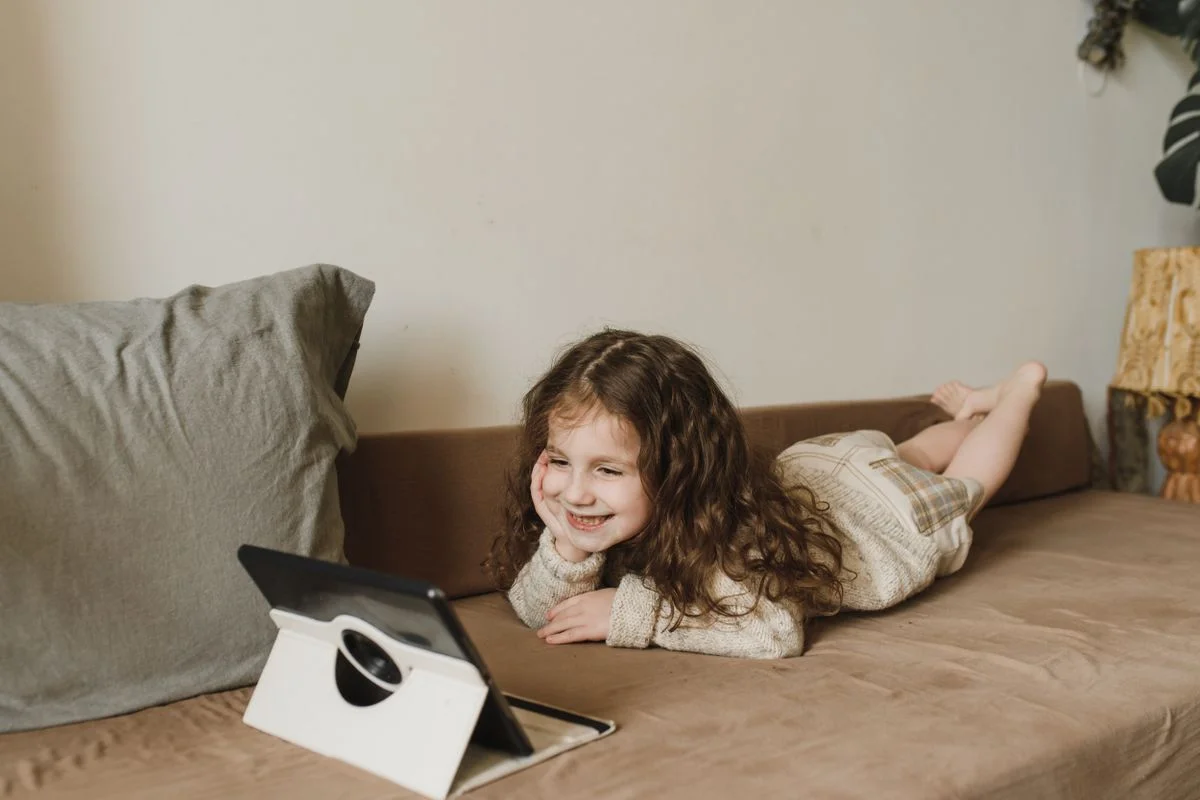
Seven Family Rules That Make It Stick
- Write the rules down. Put this screen time rules for toddlers by age chart on the fridge where everyone can see it. Rules on paper are harder to forget than rules in your head.
- Keep the same times every day. The same show after lunch, or the same hour before dinner, is easier to accept than a different time every day.
- Watch together when you can. Co-viewing turns screen time into family time, and it is the single best thing you can do with any show.
- Give a five-minute warning. “Five more minutes, then we stop” works far better than switching the screen off without warning.
- Plan what comes next. “After the show, we build the tower” gives your child something to look forward to, instead of something taken away.
- Keep adult screens in check too. Children copy what they see. If phones are away at meals and at bedtime, your child will not have to be told twice.
- Stay calm when the limit is tested. The rule is the rule, even when your child is upset. A calm “I know, it is hard to stop” works better than a lecture or a second show.
For more ideas to fill the time you free up, our 25 screen-free indoor activities for toddlers are all quick, cheap and ready to go. And when the screen does come out, remember that getting your child to listen without yelling and building your child’s confidence both start with the same thing: calm, clear words, said the same way every time.
For the official age guidance behind this chart, see the AAP guidance on media and children.
Frequently Asked Questions
What if my child watches more than the chart says on some days? One long day does not ruin anything. Go back to the chart the next day, and look at the week as a whole rather than a single afternoon. A sick day, a long journey or a visit from family are all fine reasons to bend the rule for a day.
Are video calls with grandparents counted as screen time? No. Video calls are the exception, because your child is talking to a real person who talks back. Sit with your child during the call and help them join in.
Is TV better or worse than a tablet? A television is usually calmer, because it sits still and everyone watches the same thing together. A tablet is fine too, as long as you choose the shows, turn off auto-play, and keep it out of the bedroom.
What should I do when my child cries every time the screen goes off? Stay calm and keep the same routine: a five-minute warning, a clear ending, and something fun to do next. The tears usually fade within a week or two of the same routine, and they are not a sign that the limit is wrong.
Can my toddler watch a show while I cook dinner? Yes, that is one of the best uses of screen time. Pick the show in advance, set a timer if it helps, and let the show end on its own. Dinner will taste better for everyone.
One Chart on the Fridge
Screen time does not need to be a daily battle. When the rules are written down, the same every day, and fair for your child’s age, your toddler will test them a few times and then accept them, because that is what toddlers do with rules they can count on. So keep this screen time rules for toddlers by age chart on the fridge, pick the shows together, watch together when you can, and let the screen be one small part of a day full of play, talk, food and sleep. That is the whole point of the chart: not less joy, but more of everything else. When your toddler is a picky eater, our toddler meals for picky eaters safe food ideas has 21 meals built around one food they already trust.
This article is general information for parents, not medical advice. Every child is different, and if you are worried about your child’s screen habits or development, talk to your doctor or health visitor.


Leave a Reply