
“Put your shoes on. Shoes on, please. SHOES. ON.” If that sounds like your morning, you are not alone. Most parents feel like their child only listens when their voice gets loud. Learning how to get your child to listen without raising your voice can change your whole morning.
Here is the thing: young kids are not ignoring us to be rude. Their brains are still growing, and they get lost in play. The good news is that this is a skill — and like any skill, it gets easier with practice. Here is what actually works.
In This Guide
Why Kids Seem Not to Listen
When your child does not answer, it usually is not bad behaviour. A toddler deep in play honestly may not take in your words. Their brain is built to focus on one thing at a time, and right now that thing is the toy tower, not your voice from the kitchen.
Shouting from another room rarely works either. To a small child, a voice from far away is just background noise, like the radio. That is why we repeat ourselves six times and feel more and more cross.
Young children also find long instructions hard to hold in their heads. “Get your shoes, find your coat, and wait by the door” is three jobs in one sentence. By the end of it, job one is already lost. If your child not listening is driving you up the wall, start small: the way we ask matters as much as what we ask.
Groups that study young children, like Zero to Three’s resources on toddlers and communication, make the same point: short, clear words, said up close, work far better than loud ones said from far away.

How to Get Your Child to Listen: 7 Simple Changes
These small changes sound almost too simple. Try them for one week and watch what happens.
1. Get Close Before You Speak
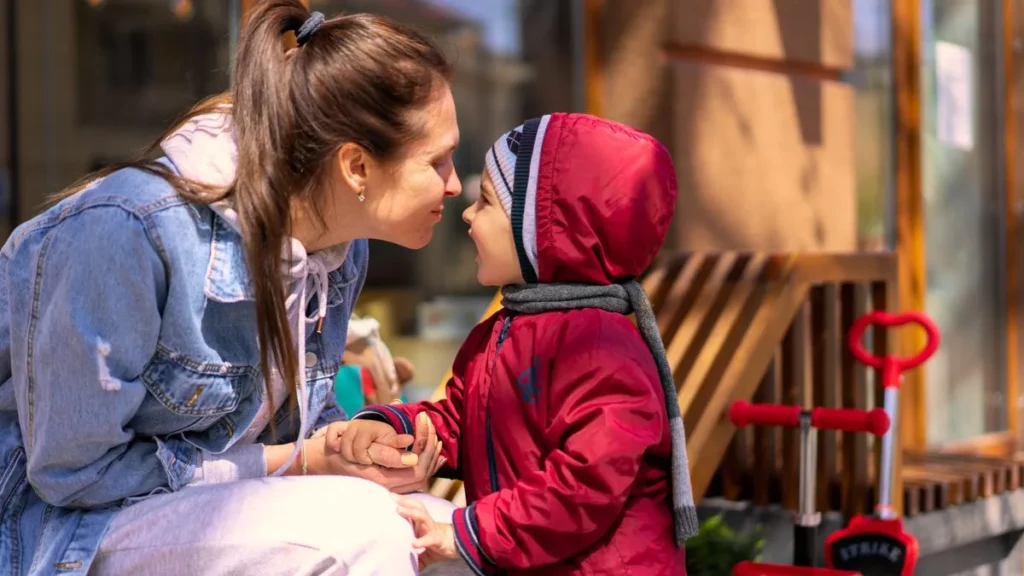
Walk over. Crouch down to your child’s level. Touch their arm gently and wait until they look at you. Then talk. Ten seconds of this saves ten minutes of shouting.
2. Use Their Name First
Say their name, and pause. “Sam.” Wait for the eyes. “…It is time to put the blocks away.” The pause gives their brain time to switch from play mode to listening mode.
3. Ask for One Thing at a Time
One short ask, in a few plain words. “Shoes on, please.” When that job is done, give the next one. A child who can do one thing well feels proud, not lost.
4. Say What TO Do, Not What to Stop
“Don’t run” tells a child what is wrong. “Walk, please” tells them what is right. Young kids picture the words we say, so give them a picture they can copy.
5. Warn Before Big Changes
“Two more slides, then we go home.” Moving from a fun thing to a boring thing is hard at any age. A fair warning makes it much easier to accept.
6. Keep Your Voice Low and Slow
A quiet voice makes kids lean in. It also keeps you calm. If you feel the shout coming, take one breath first. You are teaching listening by doing it yourself.
7. Follow Through, Calmly, Every Time
If you said the toys go away after one more throw, let them go away — kindly, without a big fuss. Kids listen more when our words turn out to be true.

What to Say Instead of Shouting
Sometimes we shout because we cannot find better words fast enough. Keep a few calm phrases ready, like tools in a pocket. You will find more of them in these positive discipline examples that many parents swear by.
- Instead of “How many times do I have to tell you?” try “I see the shoes are still on the floor. Shoes go on your feet.”
- Instead of “Stop whining!” try “I can’t understand that voice. Use your normal voice and tell me.”
- Instead of “Because I said so!” try “I know you want to stay. It is time to go, so we are going.”
- Instead of “You’re not listening!” try “Let me say it again, slowly. Look at me. Here is what we are doing.”
None of these are magic. Said kindly and often, though, they slowly change the feel of the whole house. Listening grows in a calm home much faster than in a loud one.

How to Stop Yelling on the Hard Days
Let us be honest: some days you will still yell. You are tired, the baby cried all night, and the milk just spilled. You are human, not a robot.
What matters is what you do next. Say sorry, simply. “I shouted. That was not kind. Next time I will use my calm voice.” This is not weak. It teaches your child that big feelings happen, and that we can fix things after.
To yell less tomorrow, work on the hard moments today. Most shouting happens at the same times: rushed mornings, hungry late afternoons, and bedtime battles. A snack before the danger hour and ten extra minutes in the morning can cut your shouting in half. The same calm approach helps when things really blow up, as we share in our guide to handling toddler tantrums calmly.
Calm parenting is not about being perfect. It is about yelling a little less each week, and repairing things a little faster when you do.
And protect your own tank. A parent who has eaten, sat down, and had ten quiet minutes has a much longer fuse than one running on empty. Looking after yourself is not a luxury — it is how the calm voice stays possible.
Frequently Asked Questions
Why does my child listen to other people but not me?
Because you are their safe person. Kids save their biggest feelings and their worst listening for the people they trust most. It is annoying, but it is also a back-handed compliment.
Is it normal for a 3-year-old to ignore me?
Yes, very normal. At three, kids are busy testing the world and their own will. Keep your asks short, get close, and follow through calmly. It does get easier.
What if I already yelled today?
Say sorry, give a hug, and start again. One loud moment does not undo your good work. Kids remember the pattern of the home, not one bad minute.
How long until my child starts listening better?
With close, short asks and calm follow-through, many parents see a change in one to two weeks. It will not be perfect, but it will be better.
Should I use time-out when my child won’t listen?
For most everyday not-listening, getting close and following through works better. Save firmer steps for unsafe behaviour, and keep them short, calm, and kind.
Listening Grows in a Calm Home
You do not need a louder voice to be heard. You need a closer one. When you think about how to get your child to listen, remember: get close, keep it short, say what to do, and follow through with love. Do that most days, and the shouting days will slowly fade away.
Leave a Reply