
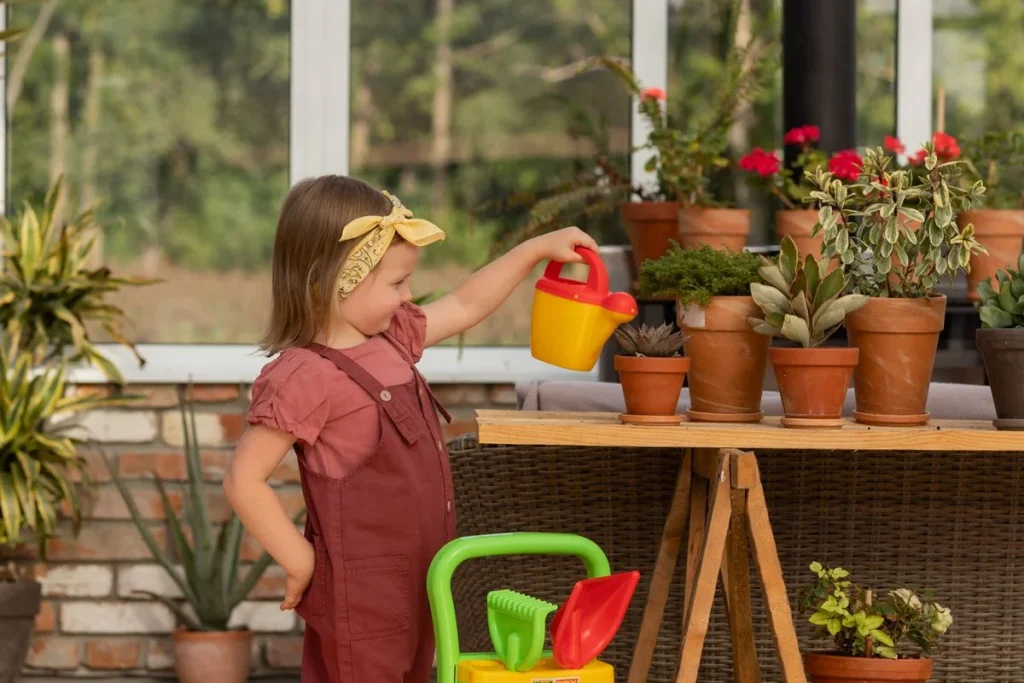
It is late afternoon. The toys are spread across the living room floor, the laundry basket is full, and your three-year-old is standing on a chair, reaching for the plates. “I help!” they say, and before you can answer, a cup is on the floor. You want to say yes. You also want the cup to stay in one piece. Most parents of three, four, and five-year-olds live in this exact moment: the child is desperate to help, and the help is not always helpful.
That is normal, and it is a good sign. A child who wants to help is a child who wants to belong. The trick is not to wait until they can do a job properly. The trick is to give them a job they can do badly, and let them do it anyway. This age appropriate chores for 3 to 5 year olds chart gives you the whole idea in one simple table: which jobs fit which age, how much help each one needs, and how to teach it without turning your home into a second classroom.
Why Small Jobs Work at Three, Four, and Five
Young children do not do chores to keep the house tidy. They do them because they want to be part of what the grown-ups are doing. When a four-year-old carries the napkins to the table, the table is not the point. The point is that the family needed something, and the child was the one who provided it. That feeling is what builds confidence, and it is also what builds the habit. A child who feels useful at four is a child who will still want to help at nine, when the jobs are bigger and the help is real.
Chores also teach in a way that lessons cannot. Sorting socks teaches matching and counting. Watering a plant teaches care and patience, because a plant does not grow faster when you stare at it. Putting toys away teaches that things have a place, and that a room can be put right again after play. None of this needs a lecture. The job is the lesson, and the lesson is short, because a young child’s attention is short too. Five minutes of helping, done well, beats half an hour of being told to help.
Keep your expectations low and your praise warm. A three-year-old’s “tidy room” will still look messy to you. A four-year-old will water the plant and half the floor. A five-year-old will make a bed that looks like a small hill. That is all fine. Praise the effort, not the result. Say what they did, not how perfect it was: “You put all the cars in the box. That was a big job.” A child who is praised for trying will try again tomorrow. A child who is corrected on every detail will stop offering.
The Chart: First Jobs by Age
Here is the age appropriate chores for 3 to 5 year olds chart in one simple table. Start with one job from your child’s row, and only one. When that job is part of the day without a reminder, add a second. The order in the table is the order to try them: easiest first, and the jobs that need you close by before the jobs they can do alone.
| Age | Jobs to start with | How much help | Time a day |
|---|---|---|---|
| 3 | Toys into a bin; dirty clothes into the hamper; wipe a small spill with a cloth | Do it together, side by side, every time | A few minutes |
| 3 | Carry their own cup to the table; put shoes in a basket by the door | Show them once, then do it with them | A few minutes |
| 4 | Set out napkins and spoons; match socks; clear their own plate | Show, then watch while they try | Five to ten minutes |
| 4 | Water the plants; feed a pet with you beside them; help unpack shopping | Guide the first times, then check after | Five to ten minutes |
| 5 | Make their bed; set the table; fold small clothes; sort the laundry | Teach it once, then let them own it | Ten to fifteen minutes |
| 5 | Help pack their school bag; wipe the table after a meal; put away their own laundry | Check when they say they are done | Ten to fifteen minutes |
Use the chart as a menu, not a test. No child needs every job in their row, and no child should get a new job on a bad day. Pick the one that fits your home. If you have no plants, skip the watering. If you have no pet, skip the feeding. The jobs that work are the ones your child can see matter: the table gets set, the toys get found again tomorrow, the plant stays alive. A job with a visible result is a job a child will want to repeat.

Step by Step: Teaching Each Job So It Sticks
The first time you teach a job, do it slowly, and do it together. Say one step at a time, and do the step yourself while your child watches. Then swap: they do the step, and you watch. Then leave the room for a minute and come back to check. Most jobs take three rounds of this before a child can do them alone, and that is normal. A job taught in a rush has to be taught twice. A job taught slowly only has to be taught once.
Make the job easy to succeed at. Put the toy bin where a small child can reach it without climbing. Keep a small jug for watering that a four-year-old can lift when it is half full. Put the spoons in a low drawer so setting the table does not need a chair. Put shoes in a basket by the door, not on a high shelf. A child fails at chores most often because the tools are too big, too high, or too heavy, not because the child is lazy. Fix the setup, and the job gets easier overnight.
Give the job a place in the day, not a place on a list. “After lunch, we clear our plates” works better than “clear your plate” said at random. “Before the story, we tidy the toys” works better than “tidy up” shouted from the kitchen. Tie the job to something that already happens, and it becomes part of the rhythm instead of an interruption. Our family evening routine works the same way: small jobs tucked into a familiar order, so nobody has to be reminded twice.
When the job is done, name what happened. “You watered the plant all by yourself” is better than “good job”. It tells the child exactly what they did, and it tells them you noticed. If the job is half done, thank them for the half and finish the rest together, without a lecture. “You got the big cars in the box. Let’s get the little ones together.” The second half of the job is a chance to help again, not proof that the first half was a failure.
Chores by Age: Three, Four, and Five
Age three: one step, with you. A three-year-old can follow one instruction at a time, and only when you are doing it with them. “Put the red cars in the box” works. “Tidy your room” does not, because a room is twenty jobs, not one. Sit on the floor with them. Hand them one thing at a time. Sing while you do it, if that helps. At three, the goal is not a tidy room. The goal is a child who learns that putting things away is part of playing, not the punishment for it. Dirty clothes in the hamper, shoes in the basket, cup on the table: these are the whole job list, and they are enough.

Age four: two steps, with you watching. A four-year-old can hold two steps in their head: “Put the spoons on the table, then bring the cups.” They can match socks, clear their own plate, and water a plant without flooding it, most of the time. They still need you close by, not to do the job for them, but to catch the moment it goes wrong and fix it calmly. This is also the age when children start to care about doing it “right”. If a four-year-old sets the table with the spoons in the wrong place, leave them there. A table set with love and a spoon on the wrong side is still a table that is set. Correct the job next time, not in front of the family at dinner.
Age five: a whole job, on their own. A five-year-old can own a small job from start to finish: make the bed, set the table, fold their clothes, pack their school bag. They can follow a short list, and they can check their own work if you show them what “done” looks like. Show them once, slowly, and let them copy you. Then agree on the standard together: “The bed is done when the blanket is flat and the teddy is on the pillow.” A clear picture of “done” is kinder than a vague demand, and it stops most arguments before they start. Five is also the age to add one job that helps someone else: wiping the table after a meal, or putting a younger sibling’s shoes by the door. Helping another person is the job that teaches the most.

Make Your Own Chart in an Afternoon
You do not need to buy a chart. A sheet of paper, three columns, and your child’s drawings will do a better job than anything printed, because your child helped make it. Start from this age appropriate chores for 3 to 5 year olds chart and pick three jobs: one your child can already do, one they are learning, and one they will grow into. Draw a small picture for each job, or cut one from a magazine. Put the chart where your child can reach it, at their eye level, not yours.
Let your child mark the chart themselves. A tick, a star, a sticker, a crayon cross: the mark is the reward, and the reward is immediate. Do not tie the chart to sweets or money. A sticker chart that earns a toy teaches a child to work for the toy. A chart that earns a tick teaches a child to work for the tick, and then for the feeling of a job done. If you want a bigger celebration, make it a shared one: a Friday picnic, a special story, a walk to the park together. The prize is time with you, not a thing.
Keep the chart small and keep it the same for at least two weeks. Changing the jobs every few days teaches a child that jobs are temporary. Keeping the same three jobs teaches them that jobs are part of the house, like meals and bedtime. When a job becomes easy, swap it for the next one on the chart. Retire the easy job with a small ceremony: “You don’t need the toy-bin job any more. You are a sock-matcher now.” Children love a promotion, even a small one.
If you want a ready-made guide to check your list against, the American Academy of Pediatrics has a clear age-by-age list in the American Academy of Pediatrics’ age-appropriate chores guide. Use it as a second opinion, not as a rule book. Your child is the expert on what they can do today, and you are the expert on what your home needs. The list is a starting point, not a test your child has to pass.
When Chores Go Wrong
Some days your child will refuse. That is not failure, and it is not rudeness. A tired child, a hungry child, or a child who has had a hard day at nursery will not do a job well, and pushing them will only make the next day harder. On a bad day, do the job together, or do it yourself and say so: “Today I will set the table. Tomorrow it is your turn again.” A job skipped for one day is not a habit broken. A job forced through tears is a habit that will not come back.
When a job comes back half done, resist the urge to redo it in front of your child. A bed remade by a parent while the child watches teaches the child that their work does not count. Instead, finish it together, or leave it. A half-made bed is still a bed, and nobody’s health depends on it. The next morning, show them the missing step once more, slowly, and let them try again. Children learn a job by doing it badly a few times. That is not a problem with the child. That is how learning works.
Watch out for the mess that is bigger than the job. A four-year-old watering plants will spill. A three-year-old “helping” with the washing will drop socks on the floor. Keep a cloth nearby, smile, and clean it up together. If you sigh every time they help, they will stop offering, and you will have a tidy house and a child who never lifts a finger. A little extra mess is the price of a child who helps. It is a price worth paying, and it gets smaller every month.
Do not compare your child with another child. “Your cousin makes her bed every morning” has never once made a child make a bed. It only teaches them that the cousin is better. Compare your child with their own yesterday: “Last week you needed help with the spoons. Today you did it alone.” That is a comparison they can win, and winning it makes them want to win it again. The chart on the wall is a record of their own progress, not a race with anyone else.

Questions Parents Ask
Should I pay my child for chores? No, not for the everyday jobs that keep the house running. Paying for a tidy room teaches a child that housework is a job for hire, and the day you stop paying is the day they stop helping. Keep everyday jobs unpaid, and keep them shared: everyone in the house helps, including the grown-ups. Save pocket money for extra jobs, the ones outside the normal routine, like washing the car or helping with a big clear-out. The daily jobs belong to the family, not to a wage.
What if my child only wants to help with the fun jobs? Let them. The fun jobs are the doorway. A child who loves watering plants will, in time, accept the less fun jobs too, because helping has become part of who they are. Rotate the jobs so the fun ones are shared, and pair a dull job with a fun one: “First the socks, then the watering.” Do not make the fun job a reward for the dull one every time, or the dull job will always feel like a punishment. Some days, just let them water the plants twice.
How many jobs should a three-year-old have? One. Two at the very most, and only if the first one is already easy. A long list for a three-year-old is a list that will fail, and a failed list teaches a child that chores are something you give up on. One job, done every day, done together, is a habit. Three jobs, done once and forgotten, is a poster on the wall. Start small, and grow the list when the child asks for more. Many children do ask, because being trusted with a new job feels like growing up.
My child makes more mess helping than the job saves. Should I stop them? No. Stop the job, not the helping. Swap it for a job with less mess: sorting socks instead of washing vegetables, putting shoes away instead of wiping the table. The child is learning the idea of helping, and the idea matters more than the job. In a few months, their hands will be steadier and the mess will be smaller. If you stop them now, you lose the months of practice, and you will have to start again from the beginning.
What about jobs with water, cleaning sprays, or the stove? Keep those jobs with you, not with a young child. A child under five should not handle cleaning sprays, hot water, or anything on the stove, and should never be left alone with them. Washing vegetables in cool water with you beside them is fine. Wiping a table with a damp cloth is fine. Anything with heat or chemicals is a grown-up job until much later. Safety is not a rule to bend because a child is keen. A keen child is exactly the child who needs the rule most.
What if one child helps and the other does not? Give each child their own jobs, and do not keep score between them. A five-year-old can set the table while a three-year-old puts the toys away, and both jobs matter. Praise each child for their own job, and never use one child as an example to the other. Children are different, and a job that is easy for one is hard for another. The chart belongs to the child, not to the competition. Our weekend family rhythm has room for both: shared jobs on Saturday morning, when nobody is in a rush.
A Helpful Home, One Small Job at a Time
Your child will not remember the chart. They will remember that they were trusted with a real job, and that the job mattered. They will remember carrying the plates without dropping them, and the day the plant they watered grew a new leaf. Small jobs are how a child learns that a home is something everyone makes together, not something that happens to them.
Keep the age appropriate chores for 3 to 5 year olds chart where your child can see it, keep the jobs small, and keep the praise warm. In two weeks, the job you taught slowly will be part of the day, and your child will be asking for the next one. That is the habit working, one small job at a time. Its evening pair, our toddler bedtime routine chart, works the same way at the other end of the day.
This article is general information for parents, not medical advice. Every child is different. If you are worried about your child’s health or development, please talk to your doctor or health visitor.

Leave a Reply