
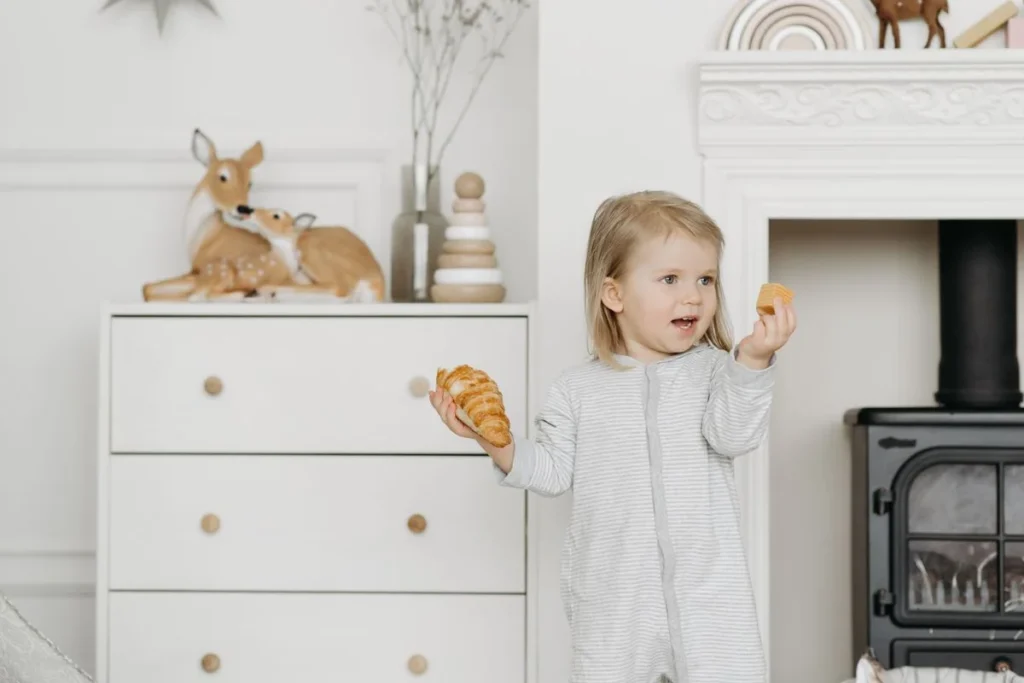
It is 7:40 in the morning. One shoe is missing, breakfast is going cold, and your toddler has decided that today is the day to wear the shirt with the dinosaur on it, and no other shirt will do. You have said “hurry up” four times already, and it has not worked once. If this sounds like your house, you are not doing anything wrong. Mornings with a toddler are hard because a toddler cannot hold a whole morning in their head. They can hold one step.
That is why a picture chart works when words do not. A chart turns a rush of instructions into a row of pictures your child can follow on their own: wake up, get dressed, brush teeth, eat breakfast, shoes on, out the door. This toddler morning routine chart with pictures gives you the whole morning in one simple table, plus the small tricks that make each step actually happen.
Why a Picture Chart Works for Toddlers
Toddlers live in the present moment. When you say “get ready, we need to leave in ten minutes”, they hear a sound, not a plan. A picture does what a sentence cannot: it stays still, it shows one job, and it waits. Your child can point to it, move a peg along it, or tick each picture off with a crayon. That small bit of control is the whole point. A child who chooses the next picture is a child who is cooperating, not a child who is being chased.
A chart also takes you out of the middle of every step. Instead of repeating yourself, you can point. Instead of arguing about teeth, you can ask, “What comes next on your chart?” The chart becomes the boss, and you get to be the helper. That shift matters more than any single tip in this article, because it is what keeps the morning calm on the days when nothing else goes to plan. Triple P’s guide to morning routines makes the same point in a different way: tell children exactly what the routine is ahead of time, and let them know what comes next.
Keep the chart short. Five to seven steps is enough. A chart with twelve steps is a poster, not a plan, and your toddler will stop looking at it by Wednesday. Put the pictures at your child’s eye level, somewhere they walk past every morning, and use photos or simple drawings they can recognise in a glance. A photo of their own shoes works better than a drawing of shoes. A photo of their own toothbrush works better than a drawing of a toothbrush.
The Chart: Seven Steps, Start to Finish
Here is the toddler morning routine chart with pictures in one simple table. The times are a guide for a family that needs to leave the house at 8:30. If your morning starts earlier or later, slide the whole row along and keep the order the same. The order matters more than the clock.
| Step | Picture | What happens | About |
|---|---|---|---|
| 1. Wake up | ☀️ Sun and bed | Open the curtains, say good morning, and give your child a minute to wake up properly. | 7:00 |
| 2. Get dressed | 👕 Shirt and trousers | Clothes are laid out the night before. Your child picks between two outfits and gets dressed. | 7:10 |
| 3. Brush teeth and wash face | 🪥 Toothbrush | Brush teeth together for two minutes, then wash hands and face with a warm cloth. | 7:25 |
| 4. Breakfast | 🥣 Bowl and spoon | Sit down together for breakfast. One simple choice, already on the table. | 7:35 |
| 5. Shoes and socks | 👟 Shoes | Socks first, then shoes. Shoes live by the door, in the same spot every day. | 7:55 |
| 6. Bag and coat | 🎒 Bag | Bag packed the night before. Coat on, bag on, and a quick check: lunch, water, and anything for nursery. | 8:05 |
| 7. Out the door | 🚪 Door | One last look at the chart. Every picture ticked? Then go, with a wave at the window. | 8:15 |
Notice what the chart does not include: it does not include getting yourself ready. Do that before you wake your child, if you can. Fifteen minutes on your own, with your own clothes on and your own bag packed, is the cheapest calm a morning can buy. When you are ready, you can be patient. When you are still getting ready too, every small delay feels like a disaster.

Step by Step: Making Each Picture Happen
A chart only works if each step is easy enough for a toddler to actually do. Here is how to make each one work in a real house, on a real morning, with a real two, three, or four-year-old.
1. Wake up slowly
Open the curtains before you speak. Light is a gentler alarm than a voice, and it gives your child’s body a minute to catch up with the day. Say good morning, sit on the edge of the bed for a moment, and let them stretch. A child who is pulled out of sleep and straight into clothes will resist the whole morning. A child who wakes up slowly has a much better chance of cooperating at step two.
If your child wakes up grumpy most mornings, look at the night before first. A late bedtime, a bright room, or a restless night will show up at 7 in the morning, and no chart can fix that. Our family evening routine is the other half of this chart: the morning starts the night before.
2. Get dressed without a battle
Getting dressed is the step where most mornings fall apart, and it is almost always about choice. A toddler who is told what to wear will argue. A toddler who chooses between two outfits will feel like the boss. Lay out two outfits the night before, on a low shelf or a small chair, and let your child pick in the morning. Two is the right number. One is an order. Five is a negotiation that lasts twenty minutes.
Make the clothes easy. Elastic waists, wide neck holes, and shoes that fasten with straps instead of laces will save you minutes every single day, and they let your child do more of the job themselves. A child who can pull their own trousers up is a child who is proud, not a child who is stalling. If buttons and zips are still hard, save them for the weekend, when there is time to practise without a clock watching.

3. Brush teeth, wash face, done
Two minutes is a long time for a toddler, so do not ask them to stand still and wait for it to pass. Sing a short song together, count to ten four times, or let them brush a toy’s teeth first. Let them hold their own toothbrush, and let them choose it: a brush they picked is a brush they will use. You will still need to finish the job yourself for a few more years, and that is normal. Let them have the first turn, then you have the last turn, and keep it light.
Put a small step stool by the sink so your child can reach the tap and see their own face in the mirror. A child who can see what they are doing will brush for longer than a child who is being held up and told to open wide. Keep the toothpaste where they can see it, and keep everything in the same place every morning, so the step runs the same way without you having to organise it each time.
4. Breakfast without the battle
Breakfast goes wrong when it is too big, too new, or too late. A toddler who is hungry and rushed will not eat, and a toddler who is asked to choose from a full cupboard will not choose. Offer one simple breakfast, already on the table, with one small choice inside it: toast or cereal, banana or berries, yoghurt or milk. Sit down with them, even for five minutes. A child eats better when someone eats with them.
If your child will not eat in the morning, do not turn it into a fight. Offer something small they can hold, like a piece of toast or a banana, and let them eat it on the way to the next step. Some children simply are not hungry the moment they wake up, and a calm walk to nursery with food in hand beats a crying child and a cold bowl of cereal every time. Keep breakfast simple on school days, and save the big cooked breakfast for the weekend.

5. Shoes, bag, and out the door
Shoes are the last step for a reason: once shoes are on, the morning is nearly done, and your child can feel it. Keep shoes by the door, always in the same place, with socks tucked inside them. That one habit removes the daily hunt through the house, and it teaches your child where things live. A small basket or a low hook by the door works for bags and coats too.
Pack the bag the night before, and check it once, together, in the morning. Lunch, water bottle, spare clothes, and anything nursery asked for. A two-minute check at the door beats a ten-minute trip back home. When everything is ticked off on the chart, make leaving feel good: a wave at the window, a silly walk to the gate, or a race to the end of the path. The last picture on the chart should feel like a finish line, not a punishment.

Morning Routines by Age: 2, 3, and 4
The same chart works at two, three, and four, but what your child can do alone changes fast. Match the chart to your child’s age, and it will feel fair. Ask too much, and the chart becomes another thing to argue about.
At two, your child can do one small job at a time with you beside them. They can pull their trousers up, point to the next picture, carry their own shoes to the door, and put a spoon in a bowl. Keep the chart to five steps, do most of the work yourself, and praise the one thing they did alone. At this age, the chart is really for you: it keeps you calm and keeps the morning in order.
At three, your child can follow the pictures in order and do more of each step. They can choose their outfit from two options, brush their teeth with you finishing the job, pour their own cereal with help, and put their own shoes on the right feet, most of the time. This is the age when the chart works best, because a three-year-old loves a job, loves a tick, and loves being the one who knows what comes next.
At four, your child can run the chart almost alone. They can get dressed, brush their teeth, eat breakfast, and get their bag, with you checking from the kitchen. Give them a little more time, not less, because a four-year-old who is trusted with the morning will take pride in it. If they dawdle, do not take the chart away. Ask what is slowing them down. Often the answer is simple: the shoes are hard, the shirt is scratchy, or they wanted five more minutes in bed.
Make Your Own Chart in an Afternoon
You do not need to buy anything to make a good morning chart. A piece of card, some photos, and a pen will do it. Take a photo of your child doing each step, or of the things themselves: their bed, their clothes, their toothbrush, their breakfast bowl, their shoes, their bag, and your front door. Print the photos small, in a row, and stick them on the card in the order they happen. Add a tick box under each one, or a peg your child can move along the row.
Let your child help make it. A child who drew the sun on the wake-up picture will look for that sun every morning. Keep the chart where it belongs: at your child’s eye level, on the bedroom door or the kitchen wall, where they pass it on the way to breakfast. Like our toddler advent calendar ideas, a chart works best when it is made for your child, with your child’s own pictures, and not bought ready-made.
Print the toddler morning routine chart with pictures and stick it where your child can reach it, then leave it alone for two weeks. A chart needs time to become a habit. Do not change the pictures, do not add new steps, and do not take it down on a bad day. If a step is not working, change how you do the step, not the chart. Looser shoes, an earlier bedtime, a simpler breakfast. The chart is the map. You are allowed to fix the road.
When Mornings Fall Apart
Some mornings will fall apart, chart or no chart. That does not mean the chart has failed. It means your child is tired, or poorly, or going through a phase where mornings are hard. Here are the three problems parents ask about most, and what helps with each one.
They will not get dressed. Stop, and make it smaller. Offer two outfits, not a wardrobe. Offer to help with one arm, and let them do the other. If they still refuse, dress them in their pyjamas’ place: sit them on your lap, talk about something else, and dress them while they are busy listening. Do not argue about the shirt. The shirt does not matter. Getting out of the door calmly matters.
They will not eat breakfast. Offer less, not more. One small thing, already on the table, with no pressure. If they eat two bites, that is enough for a nursery morning, and they can eat more when they get there. Keep a banana or a small box of cereal in the bag for the journey. A hungry child who is not being watched will often eat happily in the car or on the walk.
They dawdle at every step. Dawdling usually means the morning is too long, or too rushed, or both. Check the clock: if there are forty-five minutes between waking and leaving, that is a long time for a toddler to stay on task. Shorten the morning if you can, by doing more the night before. Or make the steps visible: a sand timer on the table, a song that lasts as long as breakfast should, or a race to beat the chart. A child who can see time passing will move faster than a child who is only told to hurry.
The Night Before: Five Minutes That Save the Morning
The best morning chart in the world will not save a morning that starts with an empty bag and no clean clothes. Spend five minutes the night before, after your child is in bed, and the morning will almost run itself.
- Lay out two outfits, with socks and underwear, on a low chair.
- Pack the bag: lunch, water, spare clothes, and anything nursery asked for.
- Put shoes by the door, with socks tucked inside them.
- Set the breakfast table: bowls, cups, and spoons ready to go.
- Check the weather, and put the coat or rain jacket by the door.
Five minutes at night is worth twenty minutes in the morning, and it is calmer minutes too. This is the same idea behind our weekend family rhythm: a little preparation, done when nobody is in a hurry, makes the busy part of the day feel easy.
Questions Parents Ask
What age should a toddler start using a morning routine chart? Most children are ready at around two and a half to three, when they can follow a picture and do one small job at a time. At two, keep it to five steps and do most of it together. At three, the chart really comes into its own. If your child is younger than two, a chart is still useful for you, as a reminder of the order, even if your child cannot follow it yet.
How many steps should a toddler morning chart have? Five to seven steps is right for most toddlers. Fewer than five, and the morning feels rushed. More than seven, and your child will stop looking at it. If your morning has more jobs than that, move some of them to the night before, or fold them into a step that already exists.
What if my child ignores the chart? Give it two weeks before you change anything, and check the steps first. Is the chart at their eye level? Can they reach the pictures? Is each step something they can actually do? A chart that asks too much will be ignored. A chart that asks just enough, with a tick or a sticker for each step, is hard to resist. If it still does not work, make the chart with them, using photos of their own things, and try again.
Should I use rewards for finishing the chart? A tick, a sticker, or a proud word is enough. A big reward every morning turns the chart into a bargain, and the day you forget the reward, the chart stops working. Save bigger treats for the end of the week, when the chart has been followed most days, and keep the daily reward small: a smile, a high five, and a calm walk out of the door.
A Calmer Start, One Picture at a Time
Mornings will never be perfect, and they do not need to be. What your toddler needs is a morning that is mostly the same, mostly calm, and mostly theirs. A picture chart gives them that. It shows them what comes next, it lets them do the job themselves, and it turns a rush of instructions into a row of pictures they can follow, one at a time.
Keep the toddler morning routine chart with pictures where your child can see it, keep the steps small, and keep the night-before prep short. The mornings will not fix themselves overnight, but in two weeks, you will notice the difference: fewer reminders, fewer arguments, and a child who points at the next picture before you have to ask. That is the morning working, one picture at a time. Our toddler bedtime routine chart shows the same idea for the end of the day, with pictures your child can follow. Our night-before prep checklist shows how to get everything ready the evening before, so the morning starts calm.
This article is general information for parents, not medical advice. Every child is different. If you are worried about your child’s sleep, eating, or health, please talk to your doctor or health visitor.


Leave a Reply