
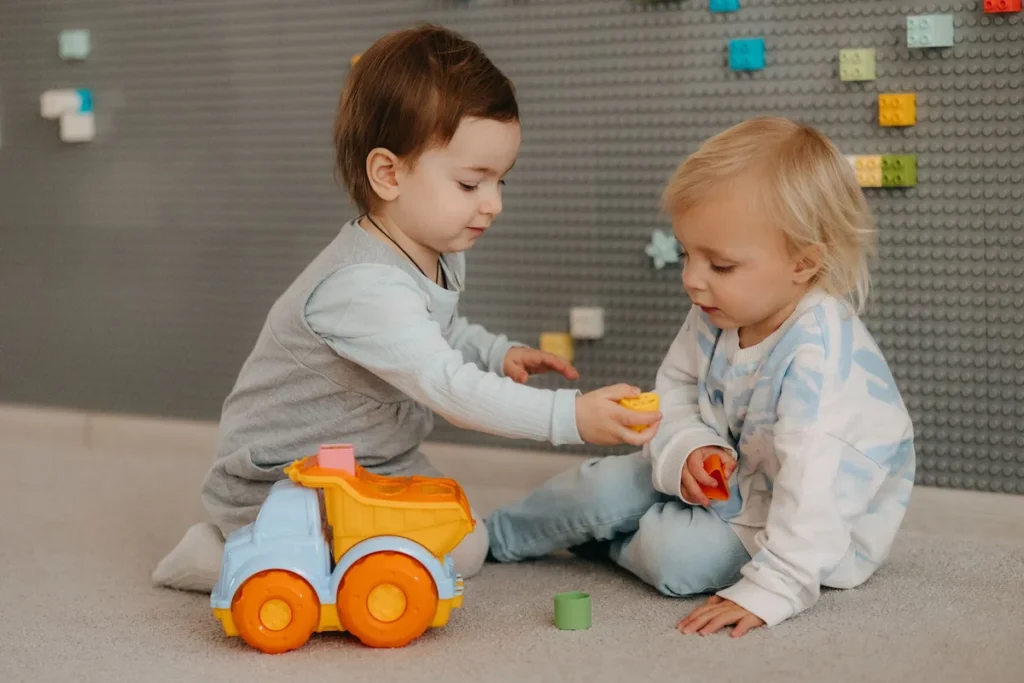
The call from daycare comes in the middle of an ordinary afternoon: “Your toddler bit another child today.” Your stomach drops. You picture your child as the biter, the other child’s parents upset, and the nursery staff judging you. It feels awful, and it is hard not to take it personally. But biting at this age is one of the most common behaviours of the toddler years, not a sign that your child is naughty or that you have done something wrong. This guide to toddler biting at daycare what to do as a parent will show you what to say to the teacher, what to do at home, and how to help your child find words instead of teeth.
Toddlers bite for the same reason they hit: their mouths and hands work faster than their words. A one-year-old bites to explore. A two-year-old bites when a big feeling arrives before the words for it. A three-year-old is starting to talk, but still bites when they are tired, crowded or desperate for a toy. The response that works is the same at every age — calm, kind and consistent — and it works best when home and daycare use the same words. That is why the advice below covers both places, with short scripts you can say word for word.
Why Toddlers Bite
Before you can stop the biting, it helps to know what is behind it. Most biting comes from one of a handful of causes, and each one points to a slightly different response. Parents often ask why does my toddler bite other children when they are gentle at home — and the answer is usually the setting, not the child. Daycare is busy, noisy and full of other small children who want the same toys, and that is exactly where a toddler runs out of words first.
| What is behind it | What it looks like | What helps |
|---|---|---|
| They cannot find the words | Bites when they want a toy, a turn or space | Give them the words: “Say ‘mine’ or ‘stop’.” |
| Big feelings | Bites when angry, excited or overwhelmed | Name the feeling and stay close |
| Teething | Bites to press sore gums, often at nappy changes or meals | Offer a cold teething ring or something safe to chew |
| Tired or hungry | Biting clusters before lunch, naps or home time | Fix the need first, teach later |
| They want space | Bites when another child gets too close or grabs | Teach “stop” and moving away |
| Copying what they see | Bites after seeing it at home or on a screen | Show gentle behaviour, and check what they watch |
None of these mean your child is being bad on purpose. A toddler who bites is usually a toddler who needs help — with words, with feelings, or with rest. Our guide to why toddlers say no covers the same drive for independence from a different angle: the child who says no with their mouth is often the same child who says it with their teeth when the words run out.
The Daycare Phone Call: What to Do First
The first call is the hardest, because it feels like a verdict. It is not. Daycare staff have seen biting a hundred times, and a good nursery expects it at this age. What matters is what happens next, and the first step is a calm conversation, not an apology tour.
Thank the teacher for telling you, then ask three short questions: what happened just before the bite, who was involved, and how the bitten child is. Write the answers down. Patterns hide in those details — the same time of day, the same toy, the same crowded corner — and the pattern is what you will fix together. Ask how the nursery responded, and what they would like you to do at home, so you can use the same words in both places.
Do not promise that it will never happen again, and do not punish your child hours later at home for something that happened at nursery in the morning. A toddler cannot connect a punishment at tea time with a bite at ten o’clock, and all they learn is that home is suddenly unsafe. The work happens in the moment, and in the practice afterwards.
Say this to the teacher: “Thank you for telling me. What happened just before it, and what did you do? We will use the same words at home — can we agree on one short line together?”

What to Say and Do at Home
At home, toddler biting at daycare what to do as a parent starts with the same three steps every time, whether the bite happened at nursery or to a sibling on your living room floor. First, stay calm and stop the bite kindly — move your child gently away, without grabbing hard or raising your voice. Second, go to the child who was bitten first. Check they are okay, in front of your child, so your child sees that hurt matters. Third, turn to your child with one short line: “Biting hurts. I won’t let you bite.” Then move on. The teaching happens in the calm minutes afterwards, not in the middle of the upset.
Short and boring is the point. A long lecture in the middle of a meltdown teaches nothing, because a flooded toddler cannot listen. Say the same few words every time, and your child will start to know what comes next, which is reassuring even when they protest. If you need ideas for staying calm yourself, our positive discipline examples show the same calm-first approach in everyday moments.
After the moment passes, usually within a minute or two, come back to it briefly. “You were cross because the toy was taken. You can say ‘mine’ or come to me.” Then offer a do-over: practise the words with a teddy, or give them something safe to chew. Do-overs work far better than apologies at this age, because they practise the right action instead of just naming the wrong one. Our guide to toddler tantrums uses the same stay-close, short-words approach when the feeling is bigger than biting alone.
Say this: “Stop. Biting hurts.” (Move your child gently away.) “You are cross. I am here.” (Pause.) “Say ‘mine’ — or come to me.”
Working With Daycare: One Plan, Same Words
The fastest way to end a biting phase is for home and daycare to do the same thing. That is the heart of toddler biting at daycare what to do as a parent: one plan, same words, both places, for two weeks at least. Agree on one short line — “Biting hurts. I won’t let you bite.” — and ask the nursery to use exactly that line, and you to use exactly that line at home. A toddler who hears one message in both places learns it twice as fast.
Ask the nursery to keep a simple note for a week or two: the time, what happened just before, and who was nearby. You keep the same note at home. After a week, look at the notes together. If the bites cluster before lunch, the fix may be an earlier snack. If they cluster at one toy or one corner, the fix may be a second toy or more space. If they cluster when one particular child is near, the fix may be keeping them apart at busy times. You are not looking for blame; you are looking for the trigger you can remove.
Also ask what the nursery does after a bite, and make sure it matches what you do: comfort the bitten child first, keep the response short, and never shame the biter in front of the group. A child who is shamed in front of others does not learn to stop biting — they learn to bite where no one is watching. If your child is testing every limit at once, our guide to setting boundaries with toddlers shows how to hold the line kindly without turning every day into a battle.
Teaching Words Instead of Teeth
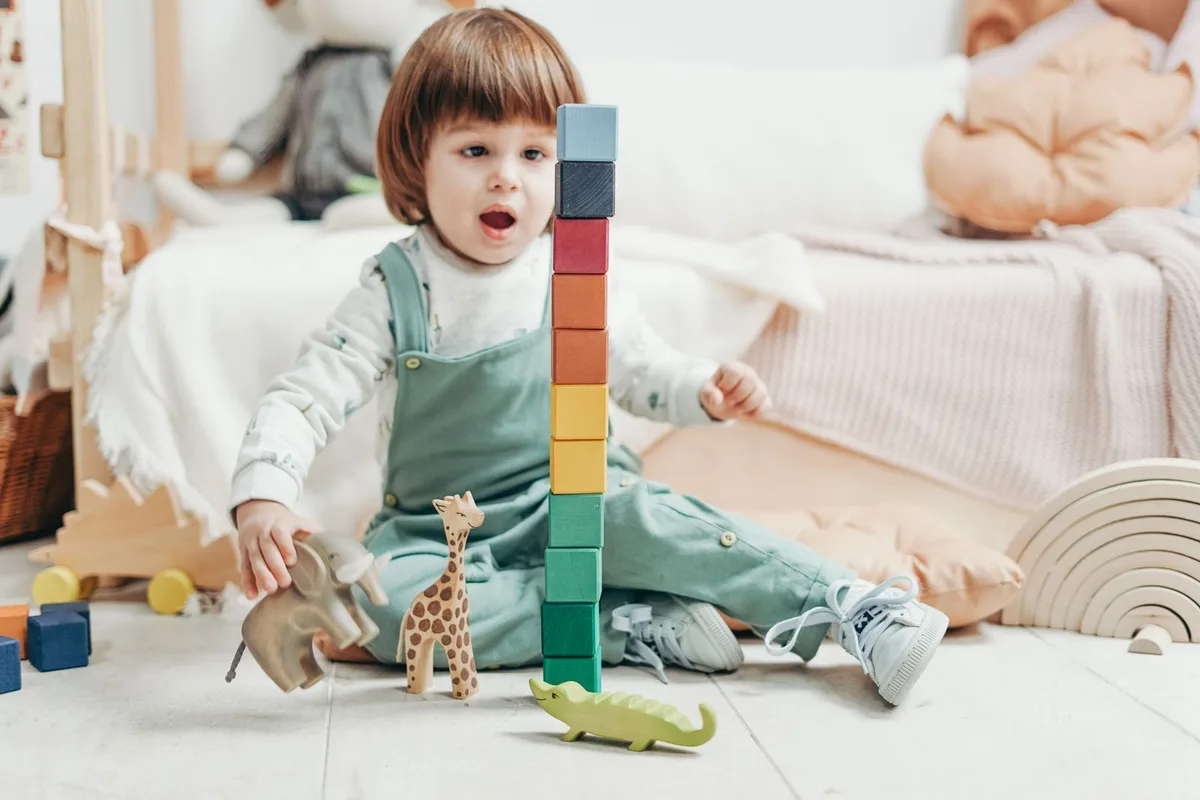
Biting stops when words arrive, and words arrive with practice — at calm times, not after a bite. Practise at a quiet moment with a doll or a teddy: “Bear wants the car. What can Bear say?” Let your child supply the words — “mine, please” or “stop” — and cheer the answer. Then practise the repair too: “Bear bit. What can Bear do now?” A toddler who has rehearsed “sorry, are you okay?” with a teddy will find it far easier to say it to a real child at nursery. Our guide to how to stop toddler hitting uses the same practice-when-calm idea, because hitting and biting are cousins: same big feelings, same missing words.
Give the mouth a job as well as the words. Teething toddlers bite because their gums hurt, and a cold teething ring, a clean damp cloth from the fridge, or a crunchy snack can take the pressure off before the bite happens. Keep a chew toy in the nappy bag and one at nursery, so there is always something allowed to bite. Playdough, water play and big movement games help too: a child who has squeezed, splashed and run has less tension left in their jaw and their hands.
Choices cut biting off before it starts. “You can play with the red car or the blue car — you choose.” A child who has chosen feels in control, and a child who feels in control bites less. Keep the choices small and real, and follow through on the one they pick.
What to Do — and What to Avoid
| Do | Don’t |
|---|---|
| Stay calm and stop the bite kindly | Bite back, even lightly — it teaches that biting is what grown-ups do |
| Comfort the bitten child first | Laugh it off — a big reaction rewards the behaviour |
| Use the same short line every time | Lecture during the meltdown — a flooded toddler cannot listen |
| Agree one plan with daycare and stick to it | Punish hours later — your toddler cannot connect the two |
| Practise words and do-overs when calm | Label your child “a biter” — labels stick |
| Offer something safe to chew | Shame them in front of others or force a sorry |
The label is the one to watch most carefully. A child who hears “you are a biter” often enough starts to believe it — and so do the adults around them. Describe the action, not the child: “biting hurts” instead of “you are naughty”. The same goes for the repair: a real repair — a pat, a shared toy, an “are you okay?” — teaches far more than a forced apology ever will.
How Long Does the Biting Phase Last?
Every parent asks the same question: biting phase how long does it last toddler? Biting usually peaks between the first and second birthday, when words are fewest and feelings are biggest, and it fades as language catches up — most children stop biting by three or four. That is the normal shape of it: a phase, not a personality.
How fast it fades depends on the cause. Teething bites fade when the teeth come through. Tired-and-hungry bites fade when the routine is fixed. Wordless bites fade as the words arrive, which is why the practice matters more than the punishment. Expect wobbles: a biting phase can flare up again after illness, a holiday, a new sibling or a change at nursery. A flare-up is normal, not a sign that you have failed — just go back to the same short line and the same calm response, and it will pass again.
When to Talk to Your Doctor
Most toddler biting fades with age, practice and a steady response. But there are times when it is right to ask for help rather than wait. Talk to your doctor or health visitor if the biting is frequent and intense, if your child often hurts themselves or others badly, if a bite breaks the skin and you are unsure about care, if the behaviour started suddenly after a big change, or if you are worried about their development or speech. The National Association for the Education of Young Children explains understanding and responding to children who bite clearly, including when biting is typical and when it is worth raising with your child’s teacher or doctor.
Ask for help for yourself too. Getting the call from daycare again and again is wearing, and feeling frustrated about it does not make you a bad parent. Talking it through — with your doctor, your health visitor, or another parent who has been there — often brings the one idea you had not tried yet.

Frequently Asked Questions
Is it normal for a toddler to bite at daycare? Yes. Biting peaks between ages one and three and is one of the most common toddler behaviours. Daycare is where it shows up most, because it is busy, noisy and full of other children who want the same toys — and because toddlers run out of words there first.
Should I bite my toddler back to show them it hurts? No. Biting back teaches that biting is how adults solve problems, and it usually makes the behaviour worse, not better. A calm stop, the same short words every time, and something safe to chew work better.
My toddler only bites at daycare, never at home. Why? Because daycare is the hardest setting: more children, more noise, more waiting, less of you. Keep the same response at home and at nursery, and ask the teacher what happens just before the bites — the trigger is usually visible once you look for it.
What if my child bites and breaks the skin? Clean the bite with soap and water, apply a cold cloth, and watch it over the next day. If it is deep, bleeding a lot, or shows signs of infection, call your child’s doctor for advice.
What if the nursery says my child might lose their place? Ask for a meeting and a written plan first: the same short line at home and at nursery, a note of triggers for two weeks, and a review date. Most nurseries would far rather work through a biting phase with you than lose a child over it — and a written plan protects everyone.
A Simple Day, Step by Step
On a hard day, keep it simple. Stop the bite kindly, comfort the hurt child first, say the same short line, and name the feeling. Practise the words when everyone is calm, agree one plan with daycare, keep a chew toy within reach, and repair afterwards with actions, not forced apologies. Expect wobbles — they are part of learning, not proof that it is not working.
Once you know toddler biting at daycare what to do as a parent, the phone call from nursery feels less frightening, even when it still stings. Your toddler is not being bad: their mouth is simply ahead of their words, and with a calm response, a little practice and a lot of patience, the words arrive. Most parents look back and find the biting phase lasted far less time than it felt like in the middle of it.
This article is general information for parents, not medical advice. Every child is different, and if you are worried about your child’s behaviour, development or health, talk to your doctor or health visitor.
Leave a Reply