

This article is for general information only and is not medical advice. If you are worried about your health or your child’s health, please talk to your doctor, midwife or health visitor.
If you have a new baby, sleep is probably on your mind a lot — mostly because you are not getting much of it. You may wonder how much your baby should sleep, when naps happen, and if things will ever feel normal. The truth is, there is no strict clock for babies. But there are loose patterns that most babies follow as they grow. This baby sleep schedule guide walks you through them, month by month, so you know what to expect in the first year — and what is just a rough week, not a real problem.
In This Guide
How a Baby Sleep Schedule Changes, Month by Month
Every baby is different, so treat these as gentle guides, not rules. Some babies sleep more, some less, and both can be just fine.
0 to 3 months: sleep in short bursts
Newborn sleep comes in small pieces, day and night. Most new babies sleep around 14 to 17 hours in total across 24 hours, but in stretches of one to three hours at a time. They wake often to feed, and that is normal and needed. There is no real schedule yet — follow your baby, feed on demand, and rest when you can.
4 to 6 months: longer nights begin
By now, many babies start to sleep for longer stretches at night, and total sleep is often around 12 to 15 hours. Day sleep starts to form into three naps for many babies. This is a good age to begin a simple, calm bedtime routine if you have not yet, as your baby starts to learn the signs that night is coming.
7 to 9 months: two naps for most
Many babies drop to two naps a day in this stage, one in the morning and one after lunch. Night sleep often gets longer and more settled, though teething, new skills like crawling, and colds can shake things up for a week or two. That is normal. Keep the routine steady and it usually settles again.
10 to 12 months: a clear day pattern
By the end of the first year, most babies sleep around 11 to 14 hours in total, with two naps still common — some drop to one nap near their first birthday, and some hold on to two for a while longer. Days often feel much more in a pattern now: wake, play, nap, play, nap, bath, bed.
A Simple Bedtime Routine That Helps
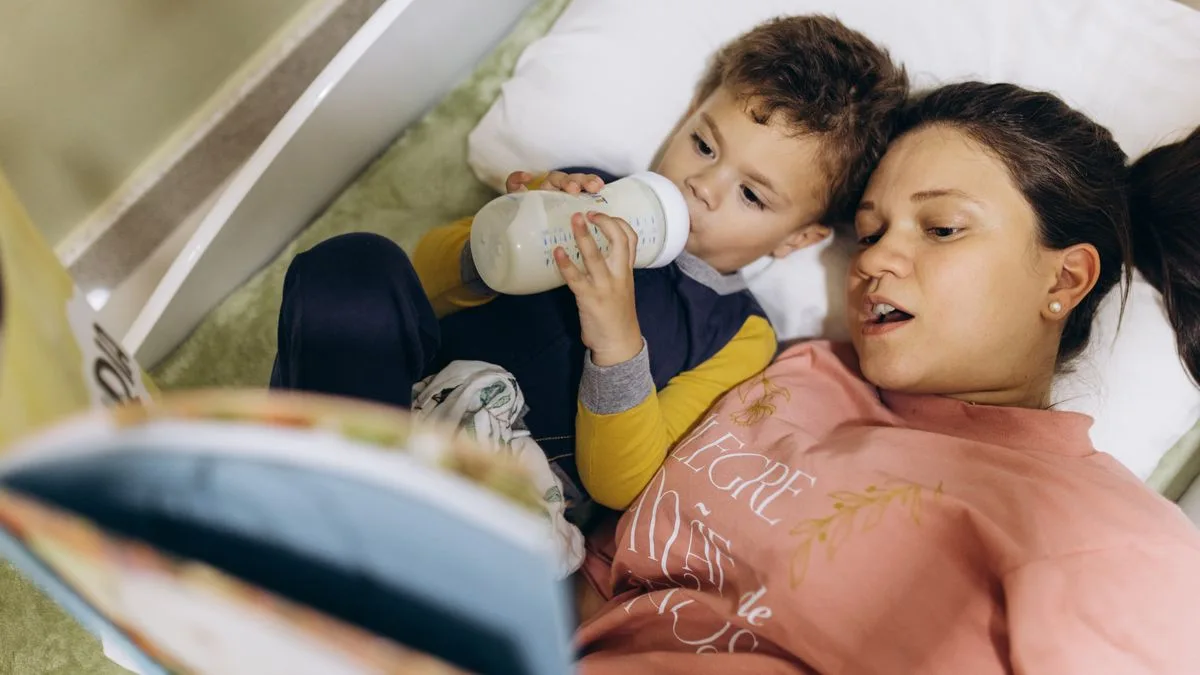
Babies learn from what happens again and again. A short routine, done the same way each night, tells your baby that sleep is coming. It does not need to be long or fancy. Twenty to thirty minutes is plenty.
Try this order: a warm bath, pyjamas and a fresh nappy, a feed, a short book or song, then into bed while your baby is sleepy but still awake. Doing the last steps in the same room each night helps too. A set evening flow also helps the whole house — our guide to a calm family evening routine shows how to fit baby bedtime in with older kids and dinner without a rush.
In the day, wake time matters as much as bedtime. Bright light, play and feeds in the day, and dark, quiet feeds at night, help your baby learn day from night in the early weeks.
If bedtime feels hard right now, change one small thing at a time — start the bath a little earlier, or add the book first — and give it a week to settle. Babies learn from what happens again and again, so slow and steady beats a big overhaul that leaves the whole house tired and cross.
Naps and Sleepy Signs
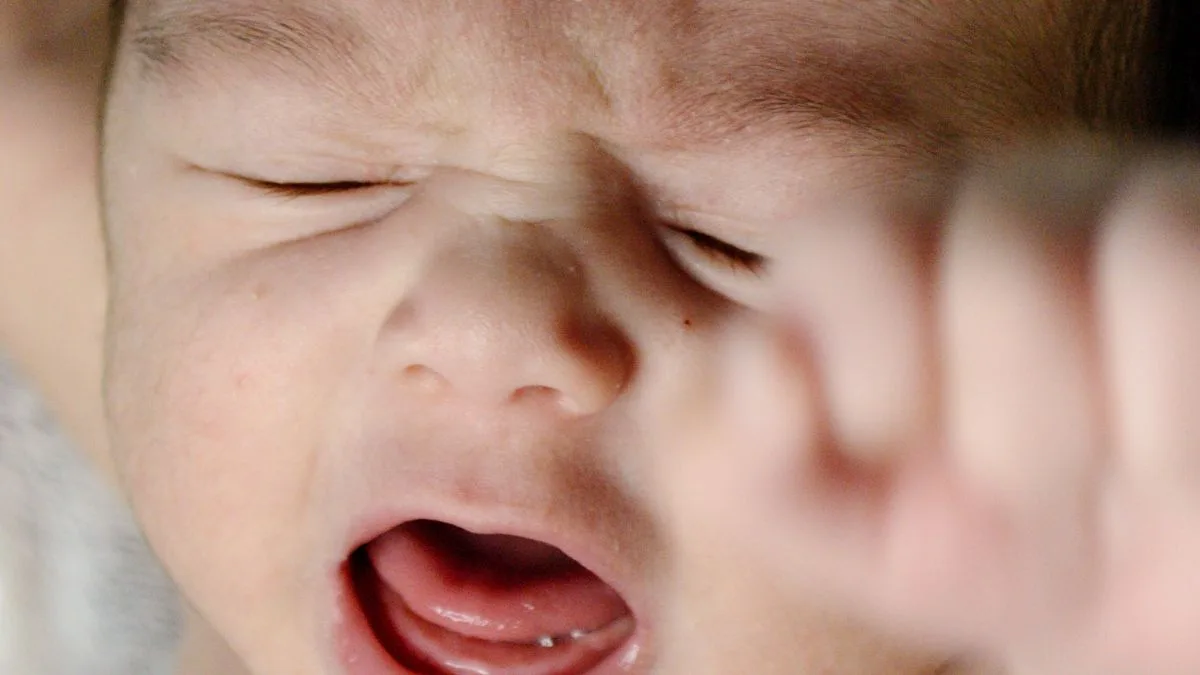
A baby nap schedule works best when you watch your baby, not just the clock. Sleepy signs tell you a nap is near: yawning, staring into space, red eyes or brows, jerky moves, and fussing that does not stop with food or play. Catching a nap at the first signs is far easier than settling a baby who is over-tired and cross.
Daytime play helps night sleep too. In wake times, give your baby time on the floor to kick, roll and play. If you are new to it, our simple tummy time guide shows how to make floor play fun and safe from the start.
Do not worry if naps are short or happen in the pram, the car or on you for a while. Naps grow and change all through the first year. What matters most is the total rest your baby gets across the whole day.
Safe Sleep Basics
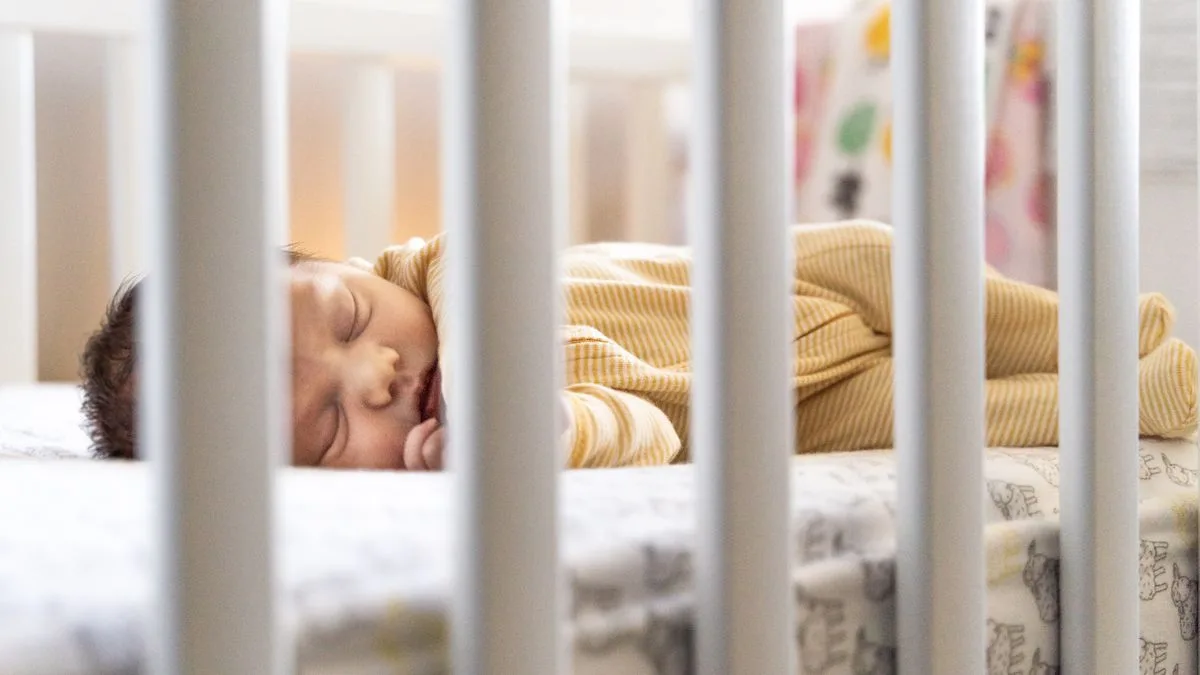
Where and how your baby sleeps matters. The safest way for babies to sleep is on their back, on a firm, flat mattress, in a cot, crib or Moses basket with nothing soft in it — no pillows, loose blankets, or toys. Keep your baby’s room at a comfortable heat, not too hot, and keep sleep spaces smoke-free.
Many health experts advise that your baby sleeps in the same room as you for the first six months, day and night. For more detail, you can read the AAP’s healthy sleep habits for children, which covers how much sleep children need as they grow. If your baby is unwell, was born early, or you are ever unsure, ask your doctor or health visitor what is right for your baby.
Frequently Asked Questions
When will my baby sleep through the night?
Every baby is different. Many sleep for one long stretch by around six months, but waking once or twice for a feed in the first year is still very normal.
How many naps does a six-month-old need?
Most six-month-olds have two or three naps a day. Watch your baby’s sleepy signs rather than the clock, and keep the total day sleep in a rough, steady pattern.
Should I wake my baby to feed?
In the first weeks, yes — new babies need feeds often, day and night, until they are growing well. Your midwife or doctor will tell you when you can let your baby sleep longer.
What if my baby only naps on me?
That is very common in the early months and is not a bad habit. Contact naps are fine. As your baby grows, you can slowly try one nap a day in the cot if you want to.
When can I start a set bedtime?
A gentle bedtime routine can start from the early weeks, and many families find a set bedtime starts to work well from around three to four months.
Rough Patterns, Not Strict Rules
A baby sleep schedule is best used as a map, not a law. Your baby will have growth spurts, colds and big new skills that shake sleep up for a bit — that is all part of the first year. Keep the bedtime routine steady, watch for sleepy signs, and trust that sleep grows as your baby does. One day soon, you will look back and realise the nights did get longer.



Leave a Reply