
Your newborn looks so small and floppy. It can feel odd to place them on their tummy on purpose. But tummy time is one of the best things you can do for your baby, and you can start from the very first days of life.
Time spent on the tummy builds strong neck, shoulder, and arm muscles. Those muscles are the base for rolling, sitting, and crawling later on. The rules are simple: only when your baby is awake, always with you watching, and little and often beats one long session.
In This Guide
When to Start Tummy Time
You can begin right away, from day one. In the first week or two, most babies are happiest lying tummy-down on your chest while you lean back. Your heartbeat, your face close by, and your warm body make it feel safe.
Aim for very short goes at first — one or two minutes, a few times a day. Do it when your baby is awake, fed, and in a good mood. Just after a nappy change is a handy moment, as your baby is already on a flat surface and wide awake.
The child development experts at Pathways.org, a trusted source for clear guidance for parents, suggest building up slowly and stopping before your baby gets fed up. Short and happy is the goal, especially in the early weeks.

How Much Time on the Tummy, by Age
Every baby is different, so treat these numbers as a soft guide, not a test to pass.
- Newborn to 1 month: one or two minutes at a time, a few times a day, often on your chest.
- 1 to 2 months: short goes of three to five minutes, building up to about 15 to 30 minutes spread across the day.
- 3 to 4 months: many babies are happy with an hour or so in total across the day, in lots of little goes. They start to push up on their arms and look around like a tiny meerkat.
- 5 to 6 months: floor play becomes the main event. Babies pivot, reach for toys, and may start to roll both ways.
If your baby was born early, ask your health visitor when to start and how fast to build up. And remember that awake floor play is just one part of the day — it sits happily alongside feeds, cuddles, and baby sleep in the first year, which has its own rhythm.
You do not need a stopwatch for any of this. If floor play happens most days, and your baby is getting stronger and happier on the floor week by week, you are doing it right. Babies grow at their own pace, and a slow week — a cold, sore gums, a growth spurt — is not a step back. Just keep offering the floor, keep it light and fun, and the minutes will take care of themselves.
Making Floor Play Fun: Simple Ideas to Try
The secret is to make the floor the most interesting place in the room. Here are simple ideas that work for most babies.
Get Down at Eye Level
Lie on the floor face to face with your baby. Talk, sing, pull silly faces. Your face is your baby’s favourite toy in the whole world, and they will work hard to lift their head to see it.
Use a Mirror and Bold Pictures
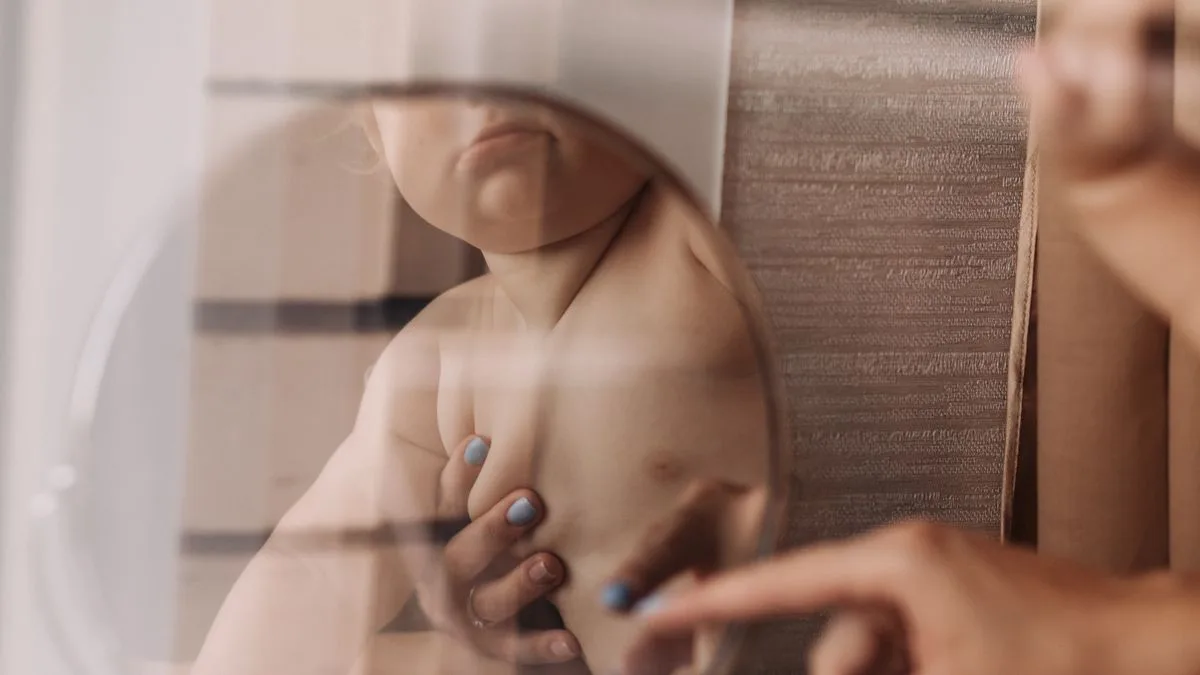
A baby-safe mirror or black-and-white picture cards give your baby something worth looking at. Place them just in front, a little to the side, so your baby turns their head both ways.
Roll Up a Towel
A rolled towel or small cushion under the chest, with arms over the top of it, makes lifting the head much easier. It is a great stepping stone for babies who find the flat floor too hard at first.
Put Toys Just Out of Reach
A soft ball or a crinkly toy placed a hand’s width away invites reaching and shuffling. Reaching is where the real strength-building happens.
If Your Baby Hates It
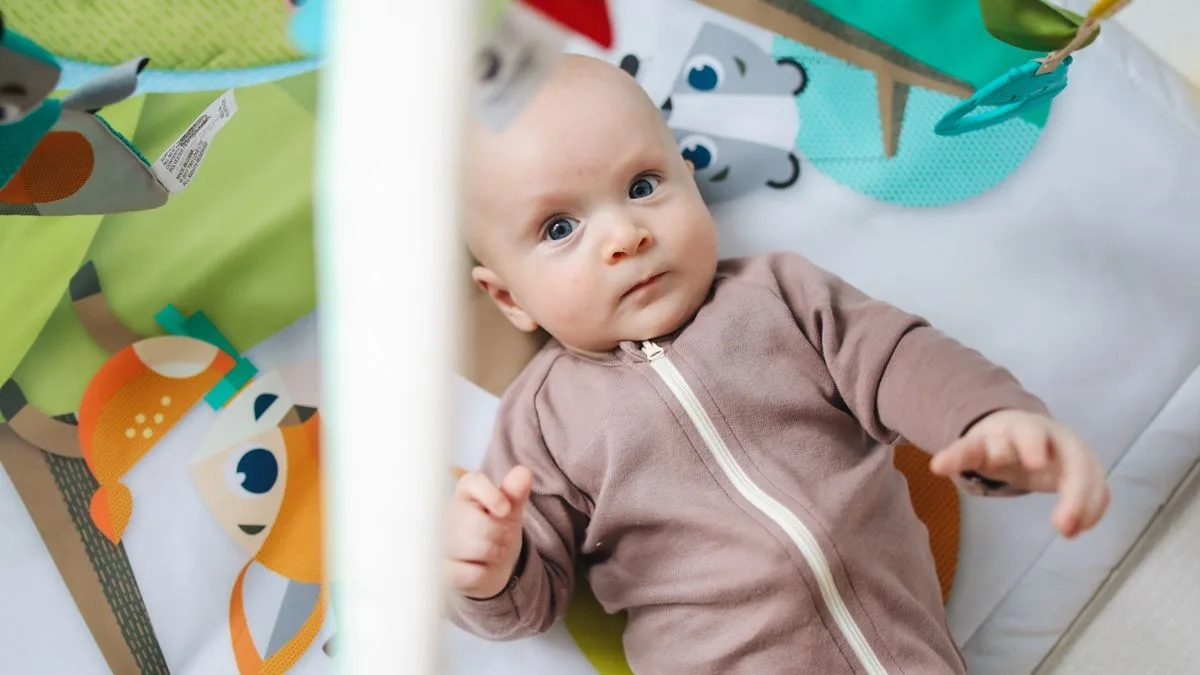
Plenty of babies protest at first. Lying on the tummy is hard work when you are tiny, and babies are not shy about saying so. A bit of grumbling is fine. Full crying means pick your baby up, have a cuddle, and try again later.
These tricks help babies who are not fans:
- Go back to chest-to-chest. Recline on the sofa and let your baby lie on you. It counts, and it feels much safer to them.
- Try after a nap or a feed — wait a little while after feeding so milk does not come back up.
- Keep it very short. Even 30 happy seconds is a win. Stop while it is still going well, not after tears.
- Try the “airplane” hold for short carries around the room, face down along your forearm. Many babies love the view.
- Make it part of the routine. A go after every nappy change soon adds up to a lot of practice without any fuss.
As your baby grows, floor play grows too. Rolling turns into crawling, crawling turns into cruising, and before you know it you will be on to games like teaching shapes through play with a busy toddler.
Two Safety Rules to Never Break
First, this play is only for when your baby is awake and you are right there watching. If your baby falls asleep on their tummy, turn them onto their back.
Second, sleep is always on the back, on a firm, flat surface, with nothing soft in the cot. Think of it this way: back to sleep, tummy to play. Follow those two rules and you can relax and enjoy the floor time together.

Frequently Asked Questions
When should we start?
From the first days of life, as long as your baby is awake and you are watching. Start with a minute or two on your chest, a few times a day, and build up slowly.
How long should a session last?
As long as your baby is happy. Early on that may be one minute. Over the first months, little and often adds up — many babies reach about an hour a day in total by three to four months.
What if my baby cries every time?
Try chest-to-chest, a rolled towel under the chest, and shorter goes at happier times of day. If your baby still hates it after a few weeks of gentle tries, mention it to your health visitor.
Does lying on my chest really count?
Yes. Your baby still has to lift and turn their head against gravity, which is the whole point. It is often the best way to start with a newborn.
When can we stop?
Once your baby is rolling and moving freely, they will choose their own positions in play. By then, floor time is just play — and you did the hard part in these early months.
Little and Often Wins
You do not need special kit, long sessions, or a strict plan. A few happy minutes of tummy time here and there, every day, is how strong necks, shoulders, and arms are built. Get down on the floor, get your face close, and enjoy watching your baby work it out.



Leave a Reply